Industry Knowledge
How E-20 Epoxy Resin Fits into the 601 Series
E-20 Epoxy Resin is commonly associated with the Epoxy Resin 601 Series, a group of bisphenol-A-based epoxy resins valued for their balanced reactivity, adhesion, mechanical performance, and chemical resistance. When selecting an E-20 grade for a specific formulation, buyers should pay attention not only to the resin designation but also to viscosity, epoxy equivalent weight, color, hydrolyzable chlorine, inorganic chlorine, and softening or melting characteristics. These parameters can directly influence curing behavior and final product consistency.
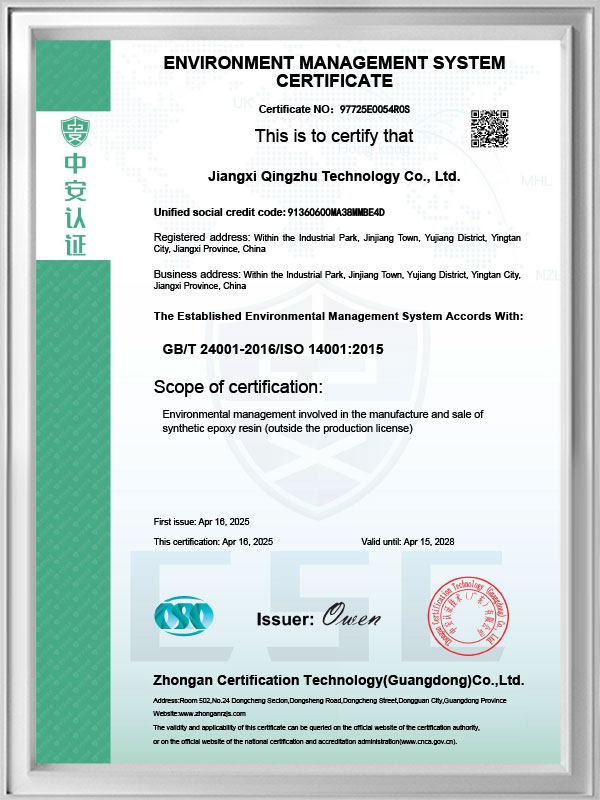
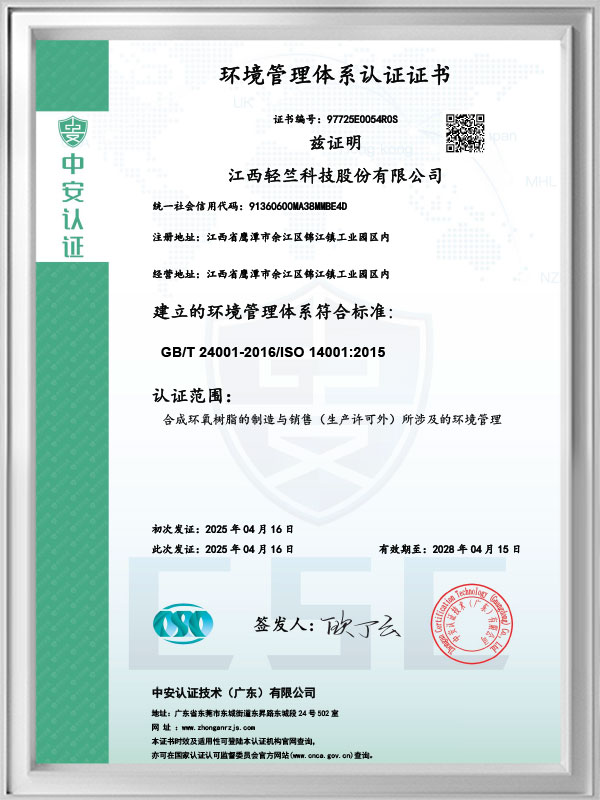
For Jiangxi Qingzhu Technology Co., Ltd., epoxy resin has become a key development area after years of experience in new materials and advanced manufacturing. Qingzhu focuses on improving resin quality and developing optimized variants for different industrial requirements. Its technical approach combines product performance with intelligent manufacturing and environmental considerations, providing a practical foundation for the continued development of E-20 Epoxy Resin and other Epoxy Resin 601 Series products.
Key Parameters Worth Checking Before Purchase
- Epoxy equivalent weight: Affects formulation calculations and the amount of curing agent required.
- Viscosity: Influences mixing, pumping, coating, impregnation, casting, and processing efficiency.
- Color and appearance: Important for applications where visual quality or color stability matters.
- Chlorine-related impurities: Hydrolyzable and inorganic chlorine levels can be important for electrical and high-performance applications.
- Storage stability: Temperature, moisture exposure, container sealing, and storage duration can affect processing consistency.
Why Viscosity Control Matters in E-20 Epoxy Resin Processing
Viscosity is one of the most practical characteristics to consider when working with E-20 Epoxy Resin. A resin that is too viscous may require additional heating or processing equipment to achieve sufficient flow, while a resin with unsuitable viscosity can make mixing with curing agents, fillers, pigments, or modifiers less efficient. In automated production, stable viscosity is particularly important because it helps maintain repeatable dosing and processing conditions from one batch to another.
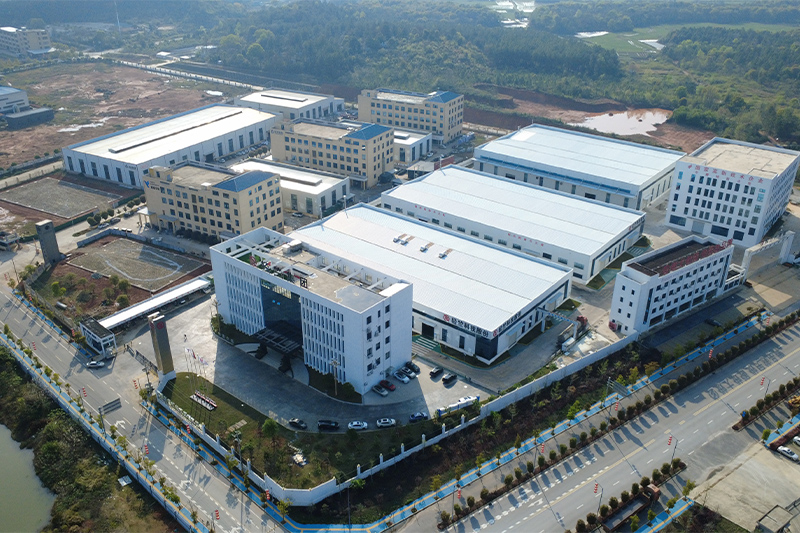
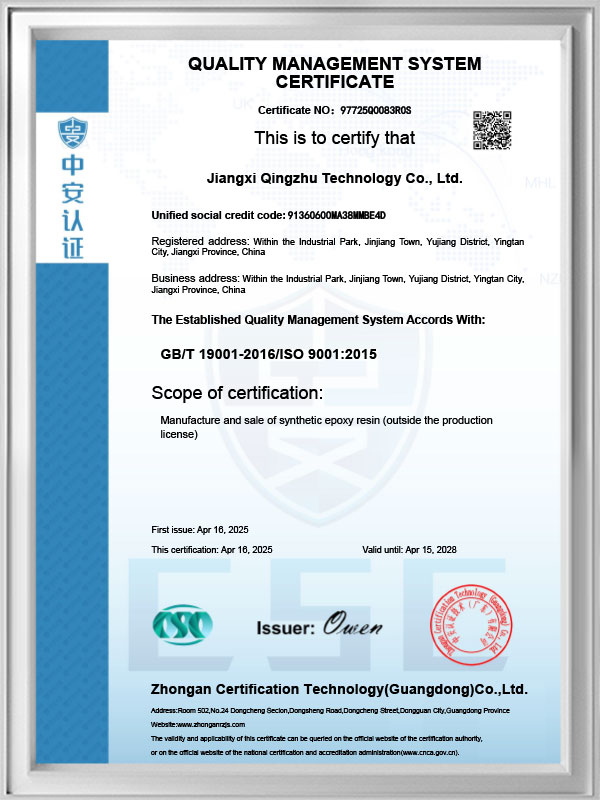
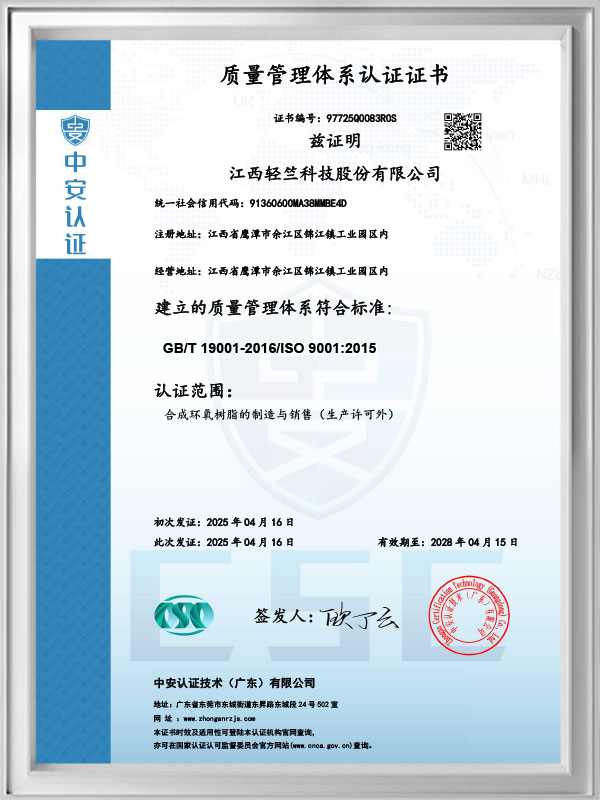
Jiangxi Qingzhu Technology Co., Ltd. has invested substantially in production and research and development, including advanced production equipment and fully automated workshops. This manufacturing infrastructure supports tighter control of production conditions and helps Qingzhu pursue more consistent quality for epoxy resin products. For customers purchasing E-20 Epoxy Resin, consistency between batches can be just as important as the nominal specification because it contributes to predictable downstream processing.
Processing Factors That Can Change Apparent Viscosity
- Temperature: Heating generally reduces viscosity and improves flow, but excessive temperatures may accelerate unwanted reactions or affect storage stability.
- Mixing conditions: High shear, mixing time, and equipment geometry can influence dispersion and apparent processing viscosity.
- Additives and fillers: Mineral fillers, reactive diluents, pigments, and other modifiers can significantly change the rheological behavior of the formulation.
- Storage conditions: Prolonged exposure to unsuitable temperatures or moisture may influence resin handling characteristics.
E-20 Epoxy Resin and Curing Agent Selection
The performance of E-20 Epoxy Resin cannot be evaluated independently from its curing system. Amine, polyamide, anhydride, and other curing-agent technologies can produce different balances of curing speed, hardness, flexibility, heat resistance, chemical resistance, and working time. The appropriate curing agent should therefore be selected according to the intended application rather than simply choosing the fastest-curing option.
Formulators should calculate the curing-agent dosage according to the resin's epoxy equivalent weight and the active hydrogen equivalent or other relevant stoichiometric parameters of the curing agent. Incorrect ratios can result in incomplete curing, excessive brittleness, poor surface properties, or reduced chemical resistance. For E-20 Epoxy Resin from Jiangxi Qingzhu Technology Co., Ltd., customers should refer to the applicable technical data and conduct application-specific testing before establishing a production formula.
Typical Formulation Considerations
| Factor |
Potential Effect |
Practical Focus |
| Resin-to-curing-agent ratio |
Cure completeness and final properties |
Calculate according to equivalent values |
| Curing temperature |
Cure speed and crosslinking development |
Establish a controlled temperature profile |
| Filler loading |
Viscosity, shrinkage, cost, and mechanical behavior |
Optimize dispersion and loading level |
| Post-curing |
Thermal and mechanical performance |
Validate according to end-use requirements |
Controlling Moisture and Contamination During Epoxy Resin Handling
Moisture, dust, foreign particles, and unsuitable additives can negatively affect the quality of epoxy formulations. During storage and handling of E-20 Epoxy Resin, containers should remain properly sealed and the material should be protected from excessive temperature fluctuations and contamination. Production areas should also maintain suitable housekeeping practices, especially when the resin is used for applications requiring good surface appearance or electrical performance.
This focus on controlled manufacturing is consistent with the development strategy of Jiangxi Qingzhu Technology Co., Ltd. Qingzhu has established fully automated advanced workshops and introduced advanced production equipment from domestic and international sources. These investments are designed to improve production stability while supporting the company's broader commitment to intelligent and environmentally responsible manufacturing.
Practical Storage Guidelines
- Keep containers tightly closed when the resin is not being used.
- Store the material in a clean, dry, and appropriately ventilated area according to the supplier's technical documentation.
- Avoid unnecessary exposure to direct sunlight and excessive heat.
- Use clean transfer equipment to reduce the risk of cross-contamination.
- Apply first-in, first-out inventory management where appropriate to maintain predictable material performance.
How Manufacturing Consistency Influences 601 Series Resin Quality
For industrial epoxy resin, quality is not determined by a single laboratory value. Raw-material consistency, reaction control, temperature management, purification, filtration, packaging, and batch testing can all affect the final product. Even when two products have similar nominal specifications, differences in manufacturing control may lead to variations in processing behavior or final application performance.
Jiangxi Qingzhu Technology Co., Ltd. has developed its business around new materials, packaging barrels, optical lens processing, and epoxy resin research and production. The company also operates with subsidiaries whose annual turnover exceeds RMB 1 billion and has maintained rapid growth. This broader manufacturing background provides Qingzhu with a substantial industrial platform for expanding its epoxy resin capabilities and improving the consistency of products such as E-20 Epoxy Resin and the Epoxy Resin 601 Series.
Quality-Control Points for Buyers
- Request a current technical data sheet and compare the specification with the actual application requirements.
- Check batch-to-batch consistency for viscosity, epoxy equivalent weight, color, and other critical parameters.
- Evaluate compatibility with the intended curing agent, filler, pigment, accelerator, or modifier.
- Conduct small-scale trials before changing a large-scale production formula.
- Consider packaging integrity and transportation conditions as part of incoming material control.
Environmental Considerations in Modern Epoxy Resin Manufacturing
Environmental performance in epoxy resin manufacturing involves more than the final formulation. Production efficiency, process automation, raw-material utilization, waste management, energy consumption, packaging, and emissions control can all contribute to the overall environmental profile of a manufacturing operation. For industrial buyers, evaluating a resin supplier's manufacturing practices can therefore provide useful information beyond the product specification itself.
Jiangxi Qingzhu Technology Co., Ltd. places environmental protection at the core of its development strategy and uses innovation-driven research and development to promote new-generation environmentally friendly products. Qingzhu's investment in intelligent production equipment and automated workshops supports its objective of improving production efficiency and product stability while maintaining a green and pollution-conscious manufacturing philosophy. This approach is particularly relevant as the epoxy resin industry continues to seek better-performing materials alongside more responsible production methods.
Why Supplier Capability Matters
When sourcing E-20 Epoxy Resin or Epoxy Resin 601 Series materials, customers should evaluate more than price. A supplier's R&D capacity, production equipment, quality-control system, technical support, supply stability, and ability to develop customized grades can have a direct impact on long-term procurement performance. Jiangxi Qingzhu Technology Co., Ltd. emphasizes integrity in business and quality-oriented development, while continuing to invest in production and R&D capabilities. These factors make supplier evaluation an important part of selecting an epoxy resin for demanding industrial applications.
Application-Oriented Evaluation of E-20 Epoxy Resin
A useful way to evaluate E-20 Epoxy Resin is to begin with the final application and work backward toward the required resin properties. Coatings may prioritize adhesion, chemical resistance, surface appearance, and curing characteristics, while adhesives may require a different balance of bonding strength, toughness, and processing time. Electrical applications can place greater emphasis on purity, insulation performance, thermal stability, and low levels of ionic or chlorine-related impurities.
For this reason, the most suitable Epoxy Resin 601 Series grade is not necessarily the material with the highest value for a single specification. A balanced combination of viscosity, reactivity, purity, compatibility, curing response, and production consistency is often more valuable. Jiangxi Qingzhu Technology Co., Ltd. continues to focus on epoxy resin R&D with the goal of improving product quality and developing variants that can better match different industrial processing requirements.
A Practical Selection Framework
- Define the end-use performance requirements before selecting the resin grade.
- Identify the required viscosity and processing temperature range.
- Confirm epoxy equivalent weight and calculate the appropriate curing-agent ratio.
- Check compatibility with fillers, pigments, modifiers, and other formulation components.
- Validate the selected E-20 Epoxy Resin through laboratory and pilot-scale testing before mass production.
Qingzhu's Approach to E-20 Epoxy Resin Development
Jiangxi Qingzhu Technology Co., Ltd. has developed from a company focused on intelligent and environmentally friendly products into a high-tech enterprise integrating new materials, packaging barrels, optical lens processing, and epoxy resin R&D and manufacturing. With epoxy resin now serving as a key strategic area, Qingzhu is working to refine product performance, strengthen quality control, and develop improved materials for industrial customers.
The company's investment in advanced domestic and international production equipment, fully automated workshops, and professional R&D personnel provides an important foundation for continued development of E-20 Epoxy Resin and Epoxy Resin 601 Series products. By combining manufacturing capability, technical development, environmental awareness, and a long-term commitment to quality, Jiangxi Qingzhu Technology Co., Ltd. aims to provide more stable and application-oriented epoxy resin solutions for customers seeking reliable industrial materials.



 English
  русский
  عربى
عربى 



 +86-15257130679
  Qingzhu Industrial Park, Yuanqu Avenue, Industrial Park, Yujiang District, Yingtan City, Jiangxi Province, China