

 English
 русский
 عربى
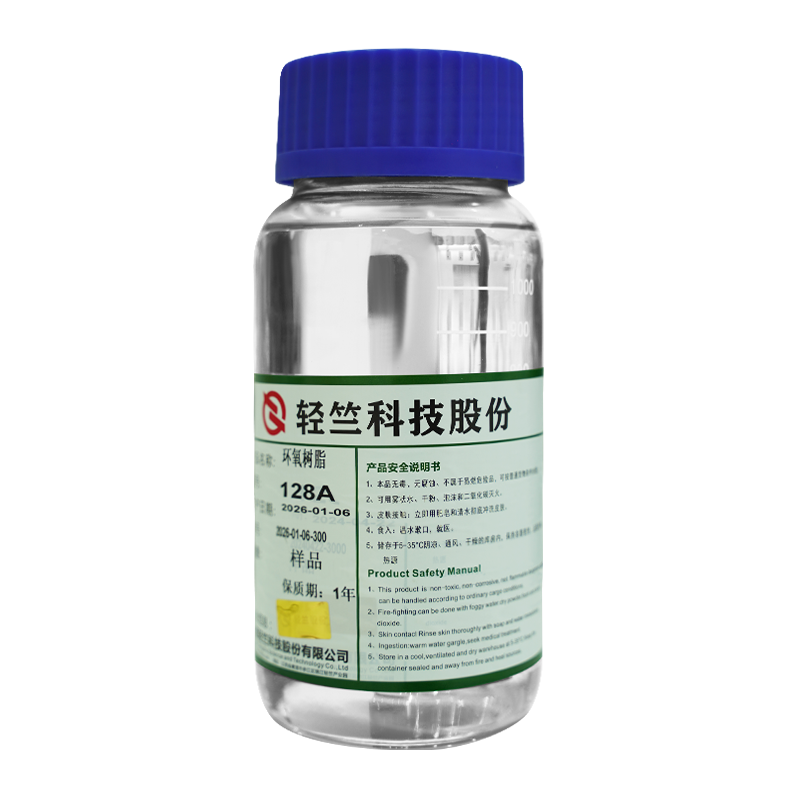
The 128A Standard Grade Liquid Epoxy Resin is a classic bisphenol A liquid resin offering a stable e...
+ VIEW MORE
 Industry News
Home / News & Share / Industry News / carbon fibre propshaft: Applications, Selection Criteria, and Practical Guidance
carbon fibre propshaft: Applications, Selection Criteria, and Practical Guidance
Qingzhu Technology – Born for Green, Driven for Tomorrow.
Content
- 1 Critical Speed Sets the Geometry Before Anything Else
- 2 Resin Class Is Chosen by Temperature, Not by Strength
- 3 Toughness, Microcracking and Fatigue
- 4 Wet-Out and the Process Window
- 5 The Bond Line Is Where Shafts Actually Fail
- 6 Numbers Worth Putting on the Drawing
- 7 Inspection and Failure Signatures
- 8 Questions That Change the Outcome
A 3 m one-piece carbon propshaft on a rear-drive track car starts buzzing at 5,600 rpm, and the owner blames the tube. In most of the failed shafts we get to examine, the tube itself is intact. The trouble sits in the resin, the cure schedule, or a 0.2 mm bond line between the carbon and the steel yoke. So here is the short answer first: a carbon fibre propshaft is a resin-and-joint problem wrapped in a fibre problem, and the purchase specification has to be written that way.
Critical Speed Sets the Geometry Before Anything Else
Steel has a hard ceiling. The speed at which a rotating tube whips itself into destruction scales with diameter divided by length squared, multiplied by the square root of specific stiffness. Carbon-epoxy carries roughly 120-150 GPa of axial modulus at a density near 1.55 g/cm3, so its specific stiffness is three to four times that of steel. That ratio buys either a far lighter shaft at the same diameter, or a smaller diameter at the same speed.
In practice, a 63 mm carbon tube in a short, stiff installation runs comfortably above 15,000 rpm, while a steel shaft of that diameter often has to be split with a centre bearing. Removing that bearing also removes a universal joint, a hanger and the wind-up that comes with them, which is why one-piece carbon shafts feel sharper on a downshift.
Two constraints follow immediately. A smaller diameter means thinner walls, so impact damage and bond-line crush become the dominant risks rather than torsional strength. And length still rules: a 1.6 m shaft at 75 mm and a 1.2 m shaft at 60 mm cannot share the same drawing template, because one of them will fail. A 75 mm tube with a 3 mm wall carries roughly 2,000-2,500 Nm of steady torque before the plus or minus 45 degree plies reach their design shear allowable, which is plenty for a production V8 and marginal for a charged one.
Resin Class Is Chosen by Temperature, Not by Strength
Most first-time buyers compare laminating resins on tensile strength. That is the wrong column. A propshaft lives 300 mm from a catalytic converter and 150 mm above the floor pan, in still air that reaches 90-110 C on a long climb. The resin only has to hold its modulus at that temperature. Once the glass transition is approached, modulus drops, the tube goes soft, and the bond line starts carrying load it was never designed to take.
A working rule: specify a glass transition at least 30 C above the highest sustained service temperature, and verify it by DMA rather than a single DSC point. A road car with a 110 C underbody needs Tg around 140 C or above. A track car with heat shielding removed is more honestly served by 170-190 C.
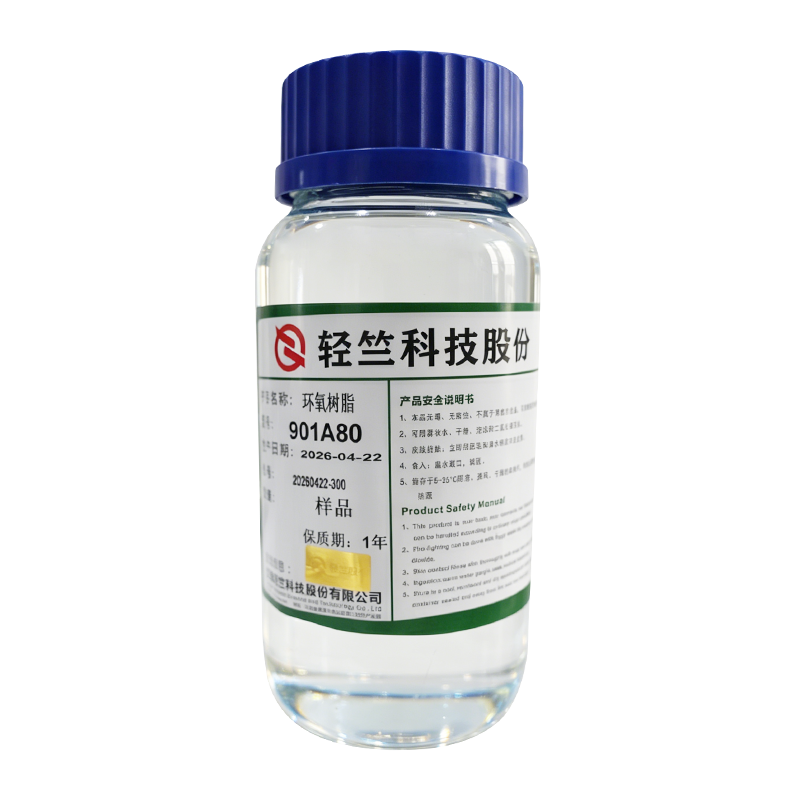 901A80 High-Temperature Specialty Liquid Epoxy ResinFor joints needing a higher thermal margin, this grade offers Tg above 160°C and continuous service to 150°C.View Product →
Grades formulated for that upper band, such as the high-temperature specialty liquid system 901A80, exist for the case where a standard laminating resin has already begun to lose stiffness. The extra heat resistance costs little in processing and buys a large safety margin on the joint.
Toughness, Microcracking and Fatigue
Stiffness gets you through the critical-speed calculation. Toughness gets you past 200,000 km. A torque tube sees shear, but it also sees bending from misalignment, engine movement and road input, concentrated exactly where the composite meets the yoke. A brittle, highly cross-linked matrix cracks there first. Water enters through the crack, the fibre-resin interface degrades, and delamination follows within a season or two.
Look for elongation at break in the 3-5% range rather than 1.5%, and ask whether the supplier reports fracture toughness at all. A slightly more flexible matrix gives away a little static strength and returns considerably more fatigue life, which is the better trade for anything that is actually driven.
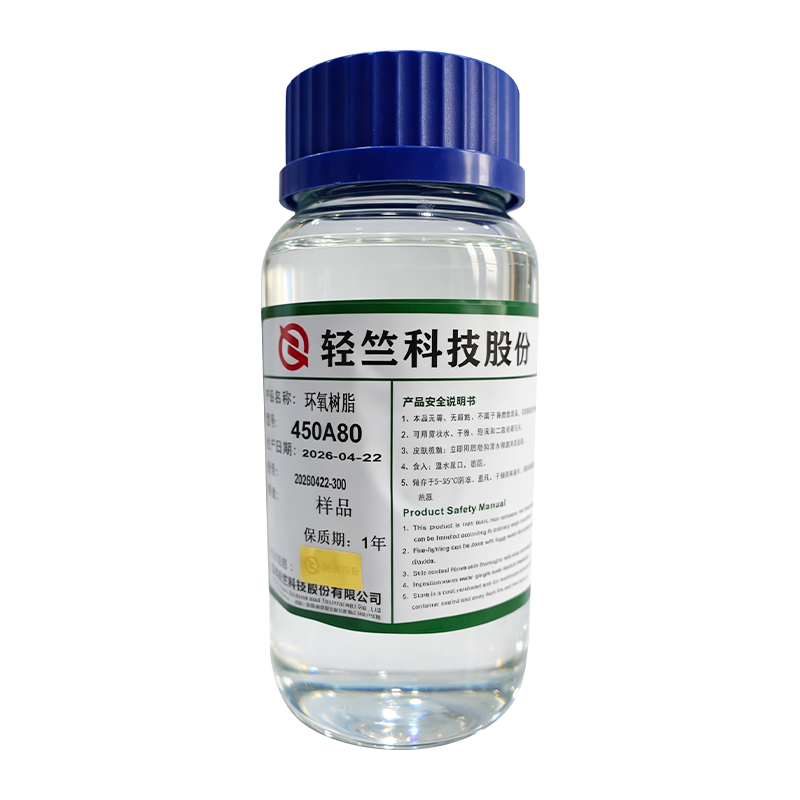 450A80 High-Solids Flexible Liquid Epoxy ResinWhere fatigue life and damp adhesion matter, this flexible grade provides toughness, crack resistance and moisture-resistant bonding for dynamically loaded joints.View Product →
High-solids flexible grades such as 450A80 sit in that window: enough modulus to behave as a torque tube, enough ductility to blunt crack tips at the joint interface.
Wet-Out and the Process Window
Filament winding is unforgiving about viscosity. At 40-60 C the bath has to be thin enough to wet 12K tow at line speeds of 30-60 m per minute, yet not so thin that it drains off the mandrel before gel. A viscosity of roughly 800-1,500 mPa.s at bath temperature and a pot life of 4-8 hours keeps a shift running without reformulating mid-run.
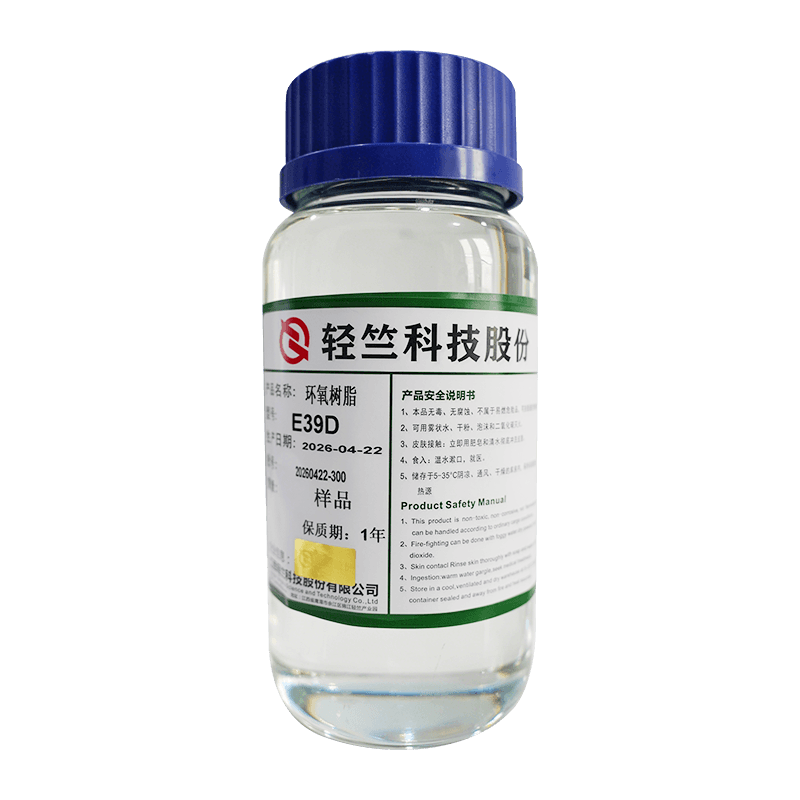 E39D Low-Viscosity Transparent Liquid Epoxy ResinFor filament winding trials, this low-viscosity transparent grade wets dense tow quickly and makes neat castings for visual inspection.View Product →
A low-viscosity, transparent grade such as E39D wets dense tow quickly and produces neat castings you can hold up to the light while qualifying a new winding pattern, which is often more useful than any datasheet number.
Prepreg and roll-wrapped tubes use the same chemistry family with different constraints: tack, out-time and a staged cure. Either route is legitimate. The question worth asking is not wound versus rolled, but "what is the void content and how was it measured?" Anything above 2% by acid digestion or microscopy is a fatigue risk hiding inside a good-looking tube.
The Bond Line Is Where Shafts Actually Fail
Carbon does not enjoy being bolted. Nearly every propshaft joins the composite tube to a steel or aluminium yoke with a toughened structural adhesive, and that joint carries the whole engine torque in shear. Design it like a structural repair, not like a workshop glue-up.
- Lap length of 1.5-2.0 times the tube inside diameter, with a tapered or scarfed end rather than a square cut.
- Bond gap of 0.1-0.3 mm, controlled by machining the yoke, never by pouring on more adhesive.
- Surface preparation immediately before bonding: fresh grit blast or peel-ply removal, solvent wipe, and bonding within four hours.
- Galvanic isolation with a thin glass or aramid layer at the interface whenever the yoke is aluminium.
- Cure to the adhesive supplier's ramp rate, not the resin's. A 20 C shortfall in the bond line can cost 30% of lap shear strength.
Adhesive and laminating resin are different products doing different jobs, and both sides of that interface deserve attention. The wider family of adhesive and sealant applications built on structural epoxies shows how much of the joint performance is decided by formulation rather than by technique alone.
Numbers Worth Putting on the Drawing
A vague purchase order produces a vague shaft. The values below are the ones that separate a specification from a wish list; adjust them for torque, length and duty cycle, but do not leave them blank.
| Parameter | Practical target | Why it matters |
|---|---|---|
| Tube wall thickness | 2.0-4.0 mm, tolerance plus or minus 0.1 mm | Below 2 mm, handling damage and bond crush dominate; above 4 mm the mass advantage disappears |
| Fibre volume fraction | 55-62% | Too low leaves resin-rich zones that crack; too high starves the bond surface of matrix |
| Winding pattern | Plus or minus 45 degree plies dominant, with axial 0 degree plies | Angle plies carry torque; axial plies stiffen bending and lift the critical speed |
| Resin glass transition | Service temperature plus 30 C minimum | Softening drops modulus and preloads the joint beyond its design case |
| Bond gap | 0.1-0.3 mm, uniform around the circumference | Thin, even glue lines outperform thick ones; voids become crack starters |
| Residual imbalance | 5 g.cm or better, runout within 0.1 mm TIR | High-speed vibration fatigues joints and wears gearbox seals |
Inspection and Failure Signatures
Most propshaft problems announce themselves before they become expensive, provided someone reads the symptoms correctly.
- A white ring or cracked resin at the yoke usually means bending fatigue, often from a lap length that was too short.
- Vibration that rises sharply at one specific road speed points to balance or to approach of the first critical speed, not to a worn joint.
- A loose yoke with a perfectly intact tube is an adhesive failure: check surface preparation, cure record and bond gap.
- Delamination after a track session with the exhaust close by is a glass transition problem, not a fibre problem.
- Fretting dust and squeal at the slip joint indicate a dry spline or driveline misalignment, both of which load the tube in bending.
For competition use, ask whether the shaft is built and proof-tested to a recognised acceptance specification such as SFI 43.1. Road cars rarely carry that paperwork, which makes the supplier's own test record more important, not less.
Questions That Change the Outcome
When you compare quotations, the tube price is the least informative number on the page. These questions sort suppliers quickly.
- Which resin class is used, what is its DMA glass transition, and was the part post-cured on a logged ramp?
- Is the tube filament wound, roll wrapped or prepreg rolled, and what void content was measured on the production run?
- What adhesive, bond gap and lap length are used at each yoke, and is every shaft proof-loaded before dispatch?
- How is the shaft balanced, to what residual imbalance, and what runout is accepted at the yokes?
- Is there a retention device or hoop to contain the shaft if a joint ever releases?
Behind those answers sits a supply chain that starts with the matrix. Composite tube development, from wet-out behaviour through cured toughness, is where most of the real engineering happens, and it is the same body of work described across composite applications for structural epoxy systems.
A carbon propshaft earns its price when the resin, the winding pattern and the bond line are specified as carefully as the fibre. Get those three right and a 4 kg tube will outlast the car around it, quietly removing a centre bearing, a universal joint and a few kilograms of rotating mass at the same time. Get them wrong and the most expensive component under the floor becomes the one that fails first.
Related Product
-
-
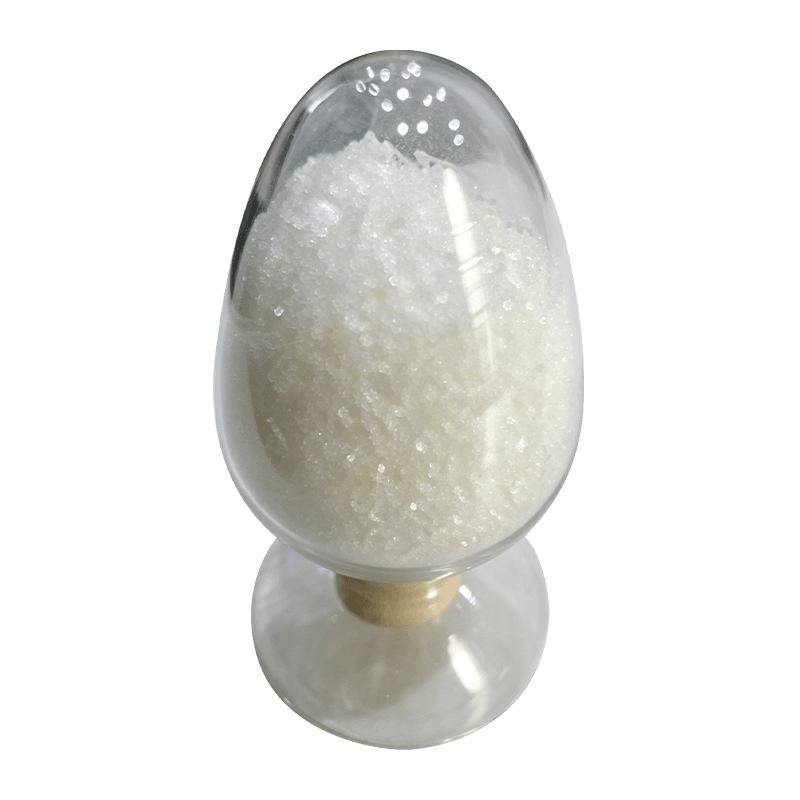
The 601 Standard Grade Solid Epoxy Resin is the foundational general-purpose grade within the 601 Se...
+ VIEW MORE

Product Categories
Epoxy Resin 128 Series Epoxy Resin 601 Series Epoxy Resin 604 Series E44 General-Purpose Liquid Epoxy Resin E39D Low-Viscosity Transparent Liquid Epoxy Resin 450A80 High-Solids Flexible Liquid Epoxy Resin 901A80 High-Temperature Specialty Liquid Epoxy ResinContact
 [email protected]
 +86-15257130679
 Qingzhu Industrial Park, Yuanqu Avenue, Industrial Park, Yujiang District, Yingtan City, Jiangxi Province, China
