

 English
 русский
 عربى
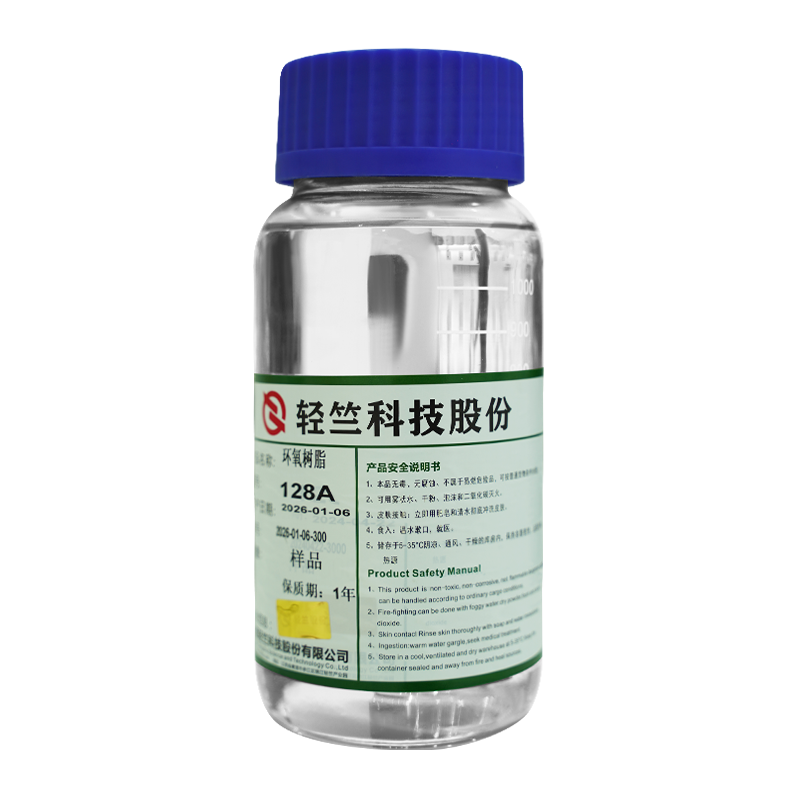
The 128A Standard Grade Liquid Epoxy Resin is a classic bisphenol A liquid resin offering a stable e...
+ VIEW MORE
 Industry News
Home / News & Share / Industry News / Composite Epoxy Material: A Practical Guide to Resin Selection and Processing
Composite Epoxy Material: A Practical Guide to Resin Selection and Processing
Qingzhu Technology – Born for Green, Driven for Tomorrow.
Content
Two epoxy quotations can look identical on paper and behave nothing alike on the shop floor. One may wet out a glass-fiber laminate in minutes and then crack from exotherm in a thick casting; another may stay workable for two hours yet leave a tacky surface because the hardener ratio drifted. The practical conclusion is straightforward: composite epoxy material is a system, not a single commodity. Match the resin, hardener, modifiers, mix ratio, and cure schedule to the process window and the service environment before comparing price per kilogram.
What Composite Epoxy Material Actually Is
A composite contains a reinforcement, such as glass, carbon, aramid, or natural fiber, and a matrix that binds the fibers, transfers load, and protects them from moisture and chemicals. Epoxy is a thermoset matrix. During cure, resin and hardener react into a crosslinked network that cannot be remelted. That network gives epoxy its useful combination of adhesion, low shrinkage, mechanical strength, and resistance to many solvents and acids. It also means the cure chemistry, not just the filler content, controls final performance.
Epoxy is often chosen when a laminate needs better fatigue performance, lower cure shrinkage, or stronger bonding to cores and inserts than polyester offers. It is not automatically the lowest-cost option, and it is not immune to water uptake, brittle fracture, or exotherm damage. Formulators toughen it, fill it, or modify viscosity for specific processes. That is why two materials both sold as composite epoxy material can have very different handling and durability.
| Matrix type | Main advantage | Main constraint | Typical composite use |
|---|---|---|---|
| Epoxy | Strong adhesion, low shrinkage, good fatigue and chemical resistance | Higher cost; moisture sensitivity; accurate mix ratio required | Structural laminates, tooling, bonding, repairs |
| Unsaturated polyester | Low cost, fast cure, easy handling | Higher shrinkage; styrene emissions; lower toughness | General-purpose panels, marine, construction |
| Vinyl ester | Better water and chemical resistance than polyester | Higher cost than polyester; styrene handling | Pipes, tanks, marine chemical service |
| Phenolic | Excellent fire, smoke, and temperature behavior | Brittle; dark color; moisture and cure control | Aircraft interiors, rail, fire barriers |
Match Viscosity and Gel Time to the Process
Viscosity decides whether the reinforcement wets out before the resin gels. In hand lay-up, a resin around 600 to 1,200 mPa s at 25 C is often workable. Vacuum infusion usually needs a lower viscosity so the flow front can travel through the laminate without leaving dry spots; many formulators target roughly 200 to 600 mPa s at the injection temperature. RTM sits between those windows, while pultrusion depends more on fast reactivity and controlled pull speed than on low viscosity alone.
Gel time is the other half of the process window. A 30-minute gel in a 5 kg mix can generate enough exotherm to craze a thick section, while an eight-hour gel in a small mold may slow turnover and allow filler settling. Ask for viscosity and gel time at the temperature you will actually use, not only at 25 C. For large infusions, a low-viscosity grade such as 128B low-viscosity liquid epoxy resin can help wet-out and bubble release, but thick castings usually need a longer pot life and a slower exotherm instead.
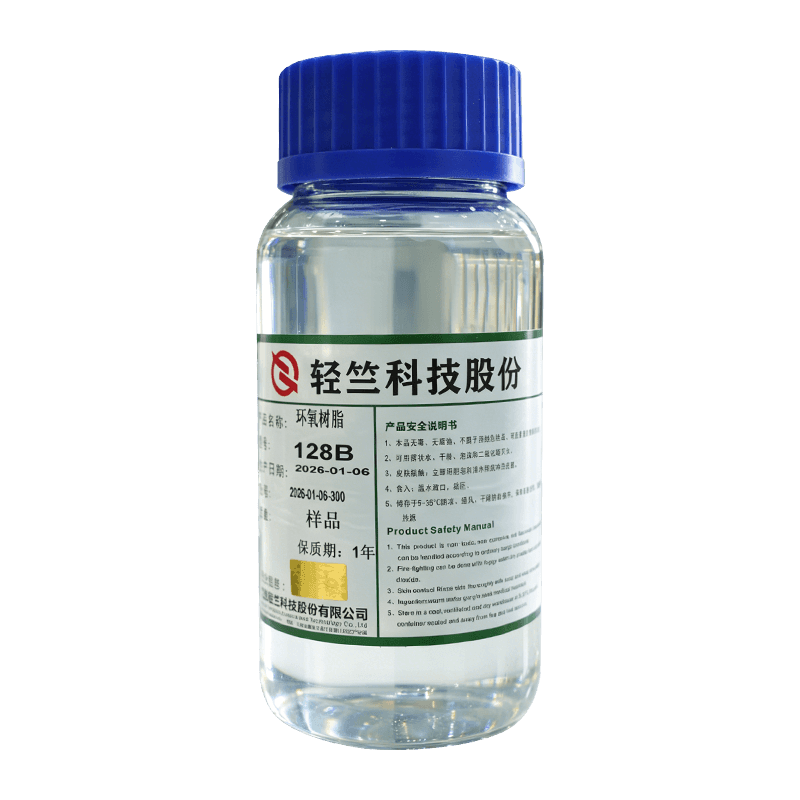 128B Low-Viscosity Liquid Epoxy Resin for Infusion and PottingLowest-viscosity 128 Series grade with good degassing and wet-out; useful for fine-gap penetration, potting, coatings, and composite infusion where flow matters.View Product →
For a wider view of laminate processes and typical use cases, see the composites application overview.
Select the Grade Around the Service Environment
Grade names are useful only when they point to a real constraint. A standard-grade liquid epoxy may be adequate for a room-temperature repair patch, while an electronic-grade material is specified where ionic cleanliness and batch consistency matter. Coating-grade resins are formulated for films and surface work, not necessarily for thick structural laminates. Solid epoxy grades such as the 601 series are easier to handle in solvent-free or high-solids coating systems, and 604-series grades add toughness or high-temperature resistance for more demanding structural work.
Specialty grades fill narrower gaps. A high-solids flexible liquid epoxy such as 450A80 can be useful where a rigid matrix would crack under thermal cycling or mechanical flex. A high-temperature specialty grade such as 901A80 is relevant for tooling, fixtures, or parts that see elevated service temperature, but it should not be selected without a post-cure and Tg check. Transparent low-viscosity grades suit visual or encapsulation work, while general-purpose E44 remains a practical starting point for many room-temperature applications.
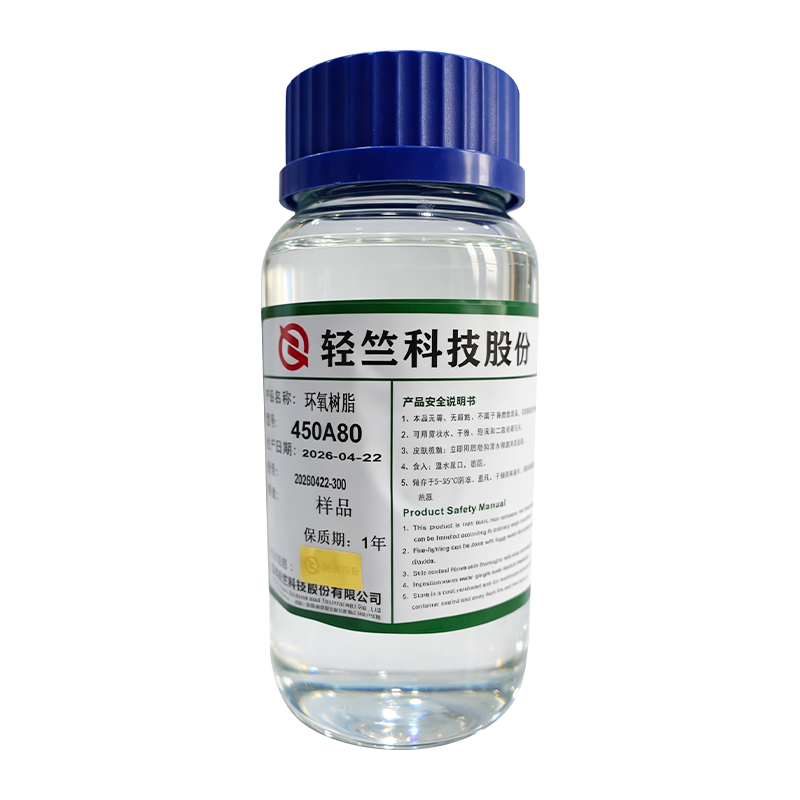 450A80 High-Solids Flexible Liquid Epoxy Resin80% solids flexible grade for damp-substrate bonding and crack-resistant coatings; worth reviewing when thermal cycling, impact, or moisture exposure makes standard rigidity limiting.View Product →
Selection should be driven by test data and the actual service condition, not by the label alone. A coating grade, an electronic grade, and a structural grade may share a similar epoxy backbone but differ in purity, viscosity, reactivity, and modifiers.
Curing, Tg, and the Numbers That Matter
The mix ratio is usually specified by weight, not volume, because resin and hardener densities differ. Small weighing errors can leave unreacted amine, a tacky surface, or a lower glass transition temperature (Tg). Tg is not the same as heat deflection temperature, but both help define the service ceiling. A part used near Tg may creep or lose stiffness even if it does not visibly fail. Post-cure often raises Tg and improves chemical resistance, but it can also introduce dimensional movement or surface defects if the ramp is too fast.
A high-temperature specialty resin like 901A80 only makes sense when the specified Tg and post-cure schedule support the service temperature.
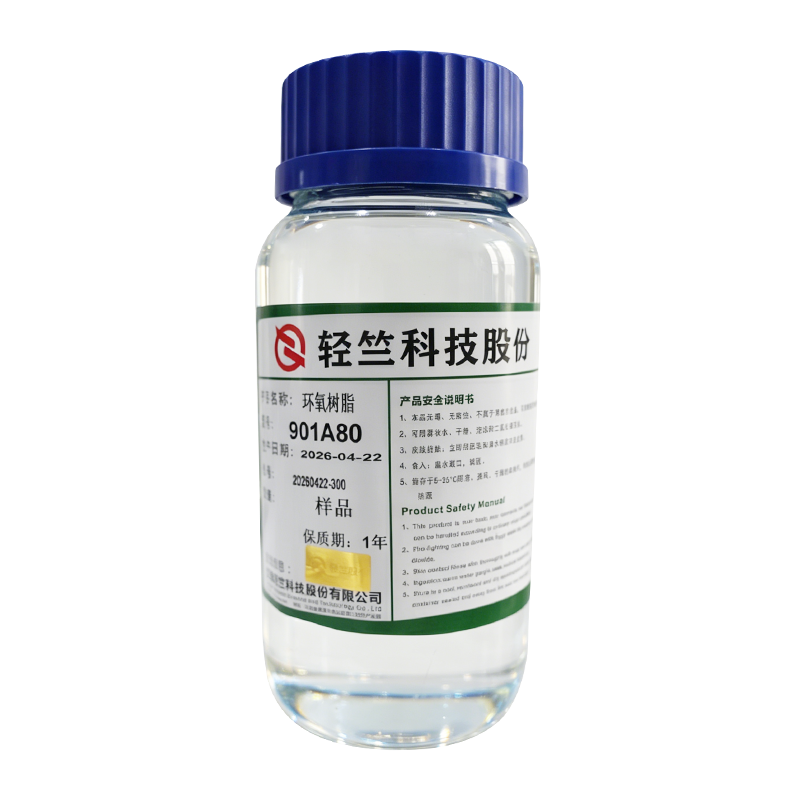 901A80 High-Temperature Specialty Liquid Epoxy ResinHighest-heat-resistance standalone grade with Tg of at least 160°C and 150°C continuous service; relevant for high-temperature encapsulation, structural bonding, and insulation applications.View Product →
| Specification | Why it matters | Practical check |
|---|---|---|
| Mix ratio by weight | Controls stoichiometry and network formation | Weigh small trial batches; confirm scale accuracy |
| Viscosity at process temperature | Determines wet-out, flow, and void release | Measure at the injection or lay-up temperature |
| Gel time and exotherm | Sets pot life and risk of thermal damage | Run a cup test at the intended batch mass |
| Tg and HDT | Define stiffness and creep limits | Check after the specified post-cure, not only at room temperature |
| Elongation and toughness | Indicate resistance to cracking and impact | Review neat-resin data and laminate test results |
| Water absorption | Affects electrical, marine, and outdoor performance | Compare conditioning time and test standard |
Processing Faults and Purchasing Risks
Most composite epoxy failures begin before the part is demolded. Amine blush appears when moisture reacts with hardener at the surface, preventing a good secondary bond. Voids come from poor wet-out, insufficient vacuum, or a viscosity that rises too quickly. Exotherm cracking occurs when a large mix or thick section cannot shed heat. A tacky or soft cure usually points to an off-ratio mix, expired hardener, or insufficient cure time. Moisture absorbed during storage can also cause foaming and inconsistent cure.
Purchasing should require a technical data sheet, safety data sheet, and certificate of analysis for each lot. Confirm the mix ratio by weight, viscosity at the application temperature, gel time for the batch size you will mix, Tg after the stated post-cure, shelf life, and packaging size. Ask how the supplier controls hardener ratio and filler dispersion, because small deviations can shift cure speed and final strength. For flexible or crack-sensitive assemblies, evaluate a high-solids flexible grade such as 450A80 against a tougher standard system and compare elongation, adhesion, and thermal cycling, not only initial hardness.
Keep trial batches small. A 200 g cup test reveals more about exotherm and pot life than a datasheet alone, and it costs far less than a failed laminate.
Where Epoxy Composite Material Is Used
Wind blades and nacelle components use epoxy for fatigue resistance and large-scale infusion control. Aerospace structures value its mechanical performance and process maturity, while automotive and marine parts use it for stiff, lightweight panels and repairs. Civil construction uses epoxy in structural bonding, crack injection, and fiber-reinforced strengthening. Electronics rely on electronic-grade epoxy for insulation and protection, and tooling shops use high-temperature grades for molds and fixtures.
Each application changes the selection priority. A wind blade may need low exotherm, long flow, and high toughness; an electronic part may need low ionic contamination and consistent cure; a repair patch may need a forgiving mix ratio and good adhesion to aged surfaces. Review the wind-energy application page for a closer look at those demands. The common thread is that composite epoxy material should be specified as a process and service system, not ordered by generic name alone.
Related Product
-
-
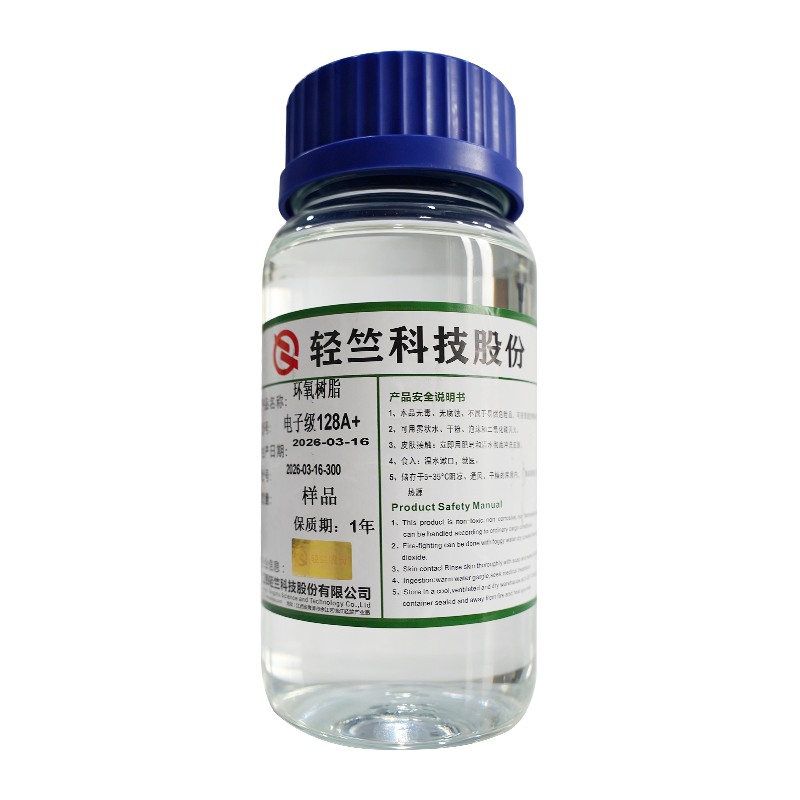
The 128A+ Electronic Grade Liquid Epoxy Resin is a high-purity bisphenol A liquid resin formulated f...
+ VIEW MORE -
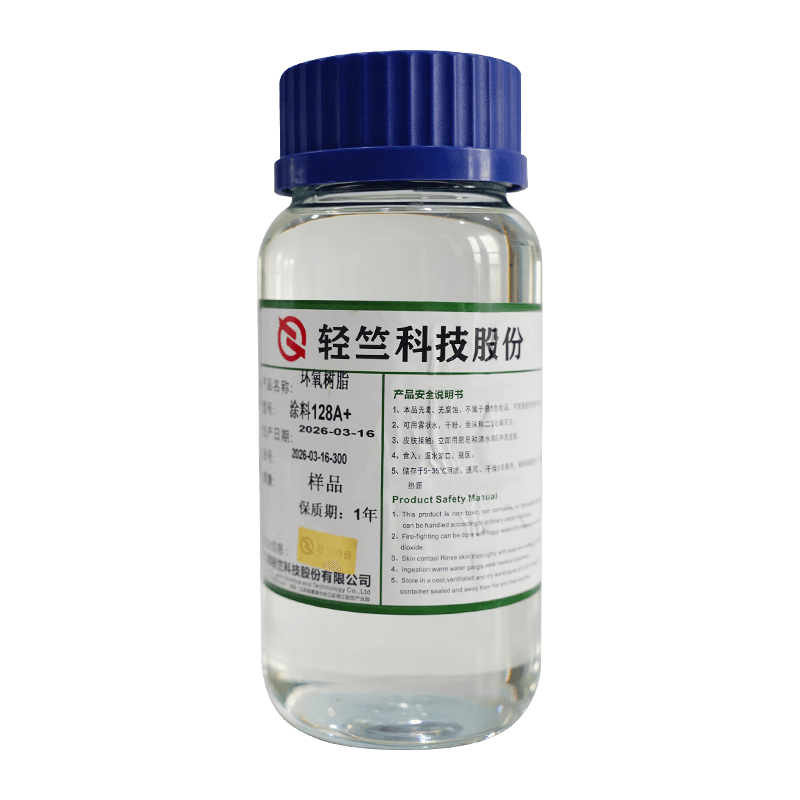
The 128A+ Coating Grade Liquid Epoxy Resin is a bisphenol A liquid resin specifically optimized for ...
+ VIEW MORE -
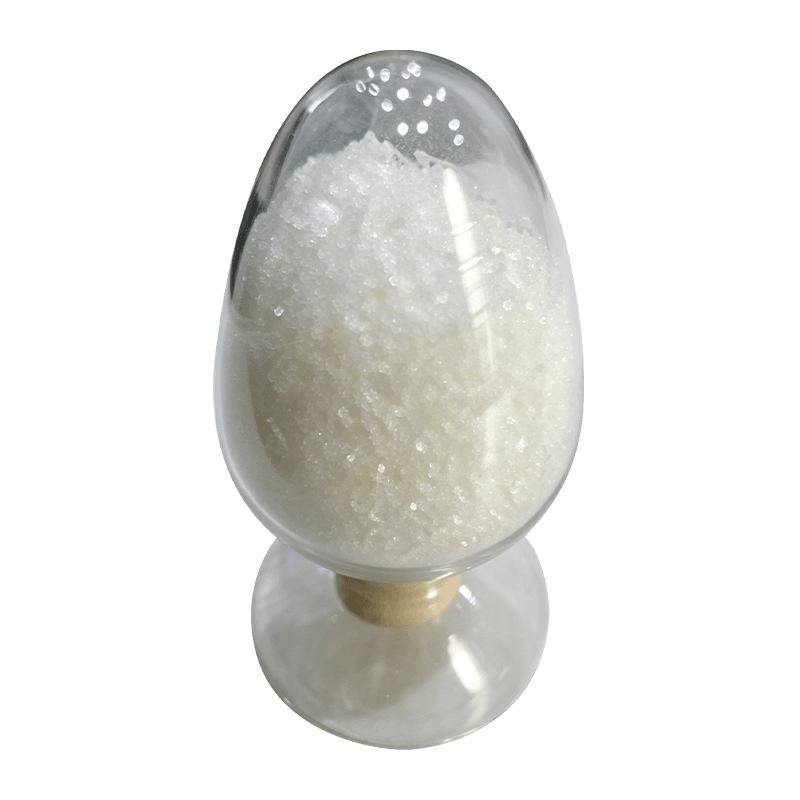
The 601 Standard Grade Solid Epoxy Resin is the foundational general-purpose grade within the 601 Se...
+ VIEW MORE -
The 450A80 High-Solids Flexible Liquid Epoxy Resin is a specialty grade within the standalone produc...
+ VIEW MORE

Product Categories
Epoxy Resin 128 Series Epoxy Resin 601 Series Epoxy Resin 604 Series E44 General-Purpose Liquid Epoxy Resin E39D Low-Viscosity Transparent Liquid Epoxy Resin 450A80 High-Solids Flexible Liquid Epoxy Resin 901A80 High-Temperature Specialty Liquid Epoxy ResinContact
 [email protected]
 +86-15257130679
 Qingzhu Industrial Park, Yuanqu Avenue, Industrial Park, Yujiang District, Yingtan City, Jiangxi Province, China
