

 English
 русский
 عربى
The 601 Standard Grade Solid Epoxy Resin is the foundational general-purpose grade within the 601 Se...
+ VIEW MORE
 Industry News
Home / News & Share / Industry News / Composite Test Methods Explained: Standards, Specimens, and Resin Choices
Composite Test Methods Explained: Standards, Specimens, and Resin Choices
Qingzhu Technology – Born for Green, Driven for Tomorrow.
Content
- 1 What a Composite Test Is Really Measuring
- 2 Core Composite Test Methods and the Standards Behind Them
- 3 Why Composite Testing Is Harder Than Metal Testing
- 4 Specimen Preparation and the Resin Decisions Behind the Data
- 5 Reading Results and Setting Acceptance Criteria
- 6 Practical Checks Before You Approve a Test Plan
A laminate can post 900 MPa in tension and then fail in compression at less than half that load. Both numbers are genuine; they describe different behaviour. That is the first thing to hold onto when you plan a composite test programme: there is no single "composite test", only a family of standardised methods, each bound to a load case, a specimen geometry and a failure mode.
The practical consequence is straightforward. Choose the test from the failure you are worried about, not from the machine you already have. A blade root section, a pressure vessel skirt and a structural bracket may all be epoxy-based composites, yet the tests that predict their service behaviour barely overlap.
What a Composite Test Is Really Measuring
A composite is anisotropic and inhomogeneous. Fibres carry load along their axis; the matrix transfers stress between them and governs transverse, shear and compressive response. A result therefore only means something when three things line up: the coupon layup represents the part, the load introduction resembles the real joint or field condition, and the failure occurs in the gauge section in the intended mode.
If a tensile coupon snaps at the tab, the number belongs in the reject bin rather than a design allowable. The same discipline applies across methods. Fibre-dominated properties such as axial modulus are stable and repeatable; matrix-sensitive properties such as compression, in-plane shear, bearing and impact damage tolerance scatter far more and depend heavily on void content, cure state and specimen preparation.
Core Composite Test Methods and the Standards Behind Them
Most qualification programmes start with a small set of methods and expand only where the design demands it. The table below groups the tests that appear in nearly every plan, the standard normally cited, and the mistake that most often invalidates a run.
| Test method | Reference standard | What it reveals | Common pitfall |
|---|---|---|---|
| Tensile, fibre direction | ASTM D3039 | Axial modulus, Poisson ratio, tensile strength | Tab debond or grip failure outside the gauge length |
| Compression | ASTM D3410 or D6641 | Compressive strength governed by matrix and interface | Buckling of the unsupported gauge section |
| Flexure | ASTM D7264 | Flexural modulus and strength from a beam coupon | Wrong span-to-thickness ratio; shear failure instead of outer-fibre failure |
| In-plane shear | ASTM D3518 | Shear response of the matrix via a ±45 degree tensile coupon | Quoting the raw result as a design allowable without correction |
| Open-hole tension and compression | ASTM D5766 and D6484 | Notch sensitivity at fasteners and cut-outs | Drilling damage and hole quality left uncontrolled |
| Compression after impact | ASTM D7136 then D7137 | Damage tolerance after a defined impact energy | Impact energy and support fixture not reported |
| Bearing | ASTM D5961 | Bolt-bearing response for mechanically fastened joints | Clamp-up torque and hole clearance not specified |
| Fibre volume and void content | ASTM D3171 and D2734 | Laminate quality behind every mechanical number | Testing coupons cut from a different panel than the one reported |
| Glass transition | ASTM D7028 by DMA | Cure state and the hot-wet service ceiling | Quoting a dry Tg against a wet service environment |
Two rules save more time than any others. Never pool data from different compression fixtures, because D3410 and D6641 give different numbers for the same material. And never report a strength value without the failure mode and the fibre volume fraction that produced it.
Why Composite Testing Is Harder Than Metal Testing
Metal testing converges on a yield point. Composite specimens fail progressively, and the rig influences the answer. Load introduction is the usual suspect: a few degrees of misalignment produces bending on top of axial load, and D3039 requires bending strain to be reported precisely so a crooked setup can be rejected rather than averaged into the dataset.
Compression is the hardest case. The coupon must be supported well enough to prevent global buckling but not so stiffly that the fixture carries part of the load. That balance is why compressive strengths vary between laboratories more than tensile strengths do, and why fixture certification and alignment checks belong in the test plan, not in the appendix.
Environment is the second variable. Conditioned coupons tested at elevated temperature in a wet state can lose a substantial share of their room-temperature dry strength, so conditioning per ASTM D5229 and the test temperature must match the service case rather than the convenience of the laboratory.
Scatter is the third. Strength coefficients of variation of five to ten percent are normal, which means a five-coupon batch carries a wide confidence interval. Increasing the sample size usually buys more certainty than adding decimal places to the report.
Specimen Preparation and the Resin Decisions Behind the Data
Resin selection sits upstream of every number on the test report, and it is where much avoidable scatter begins. Viscosity at the laminating temperature decides how quickly the bundle wets out and how much air stays trapped. Void content then shows up first in interlaminar shear and compression results, long before anyone inspects a micrograph.
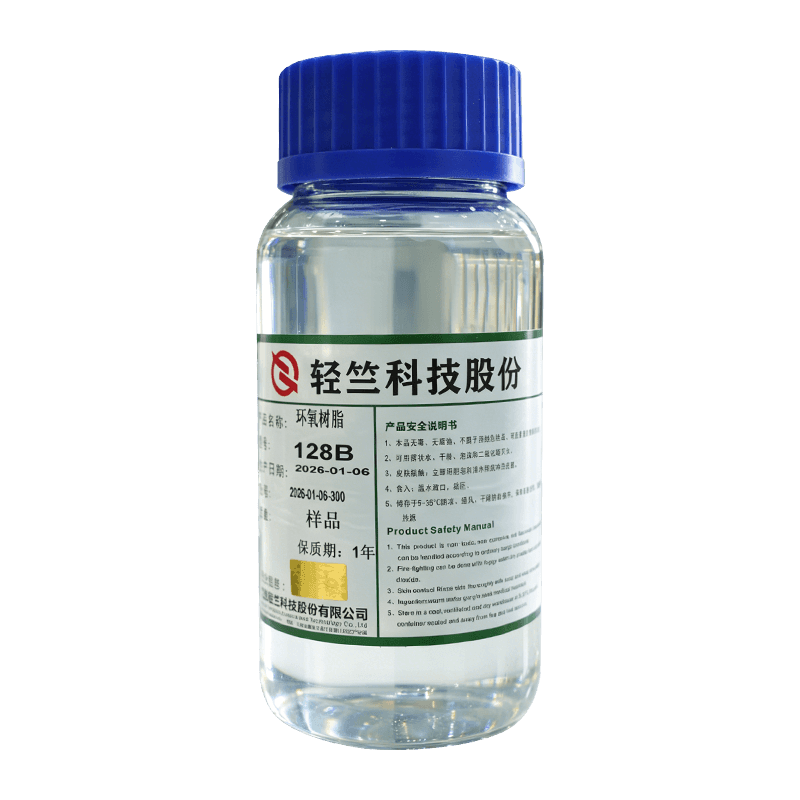 128B Low-Viscosity Liquid Epoxy ResinLow-viscosity bisphenol A epoxy for fine-gap penetration and degassing, relevant when wet-out and void control drive laminate quality.View Product →
Cure schedule matters just as much. An undercured panel produces a low glass transition temperature, an incomplete matrix and erratic compressive data, even when the fibre volume fraction looks correct. Running a DMA scan alongside the mechanical tests is cheap insurance against reporting properties the part will never see in service.
Matrix toughness drives the properties that are hardest to predict: compression after impact, open-hole compression and bearing. A high-solids flexible system is often used where strain tolerance and damage resistance matter more than maximum stiffness, and the CAI result is where that decision either pays off or does not.
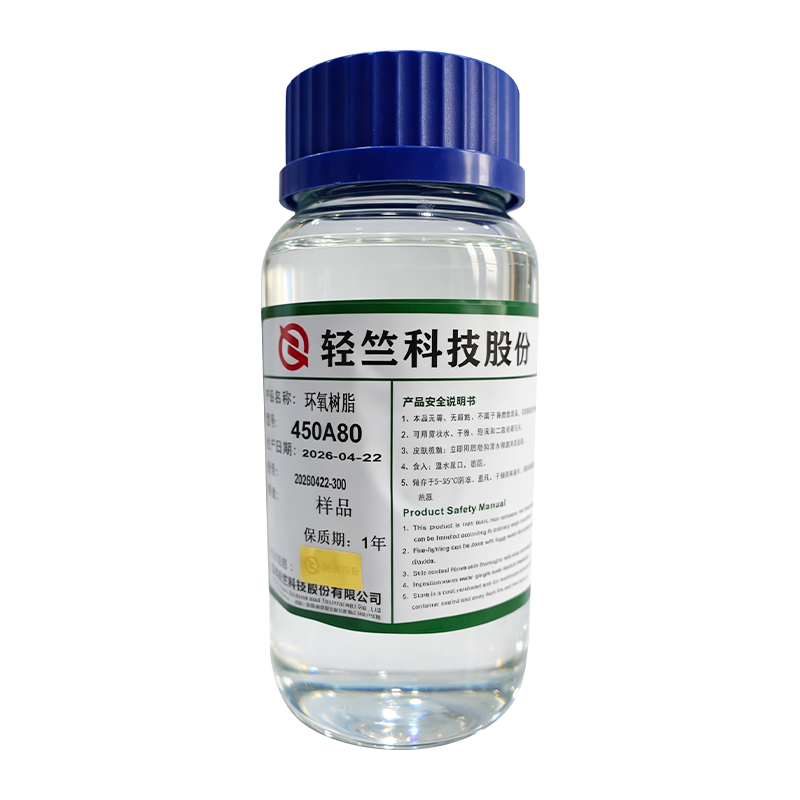 450A80 High-Solids Flexible Liquid Epoxy ResinFlexible, 80%-solids epoxy for tough, moisture-resistant bonding and crack resistance, relevant where damage tolerance and damp-substrate adhesion matter.View Product →
Elevated-temperature work adds one more constraint. If the qualification matrix includes hot-wet compression or long-term creep, the resin needs a glass transition comfortably above the test temperature, otherwise the coupon is measuring the test chamber rather than the material. High-temperature specialty grades exist for exactly that regime, and they are usually specified together with the DMA evidence rather than on their own.
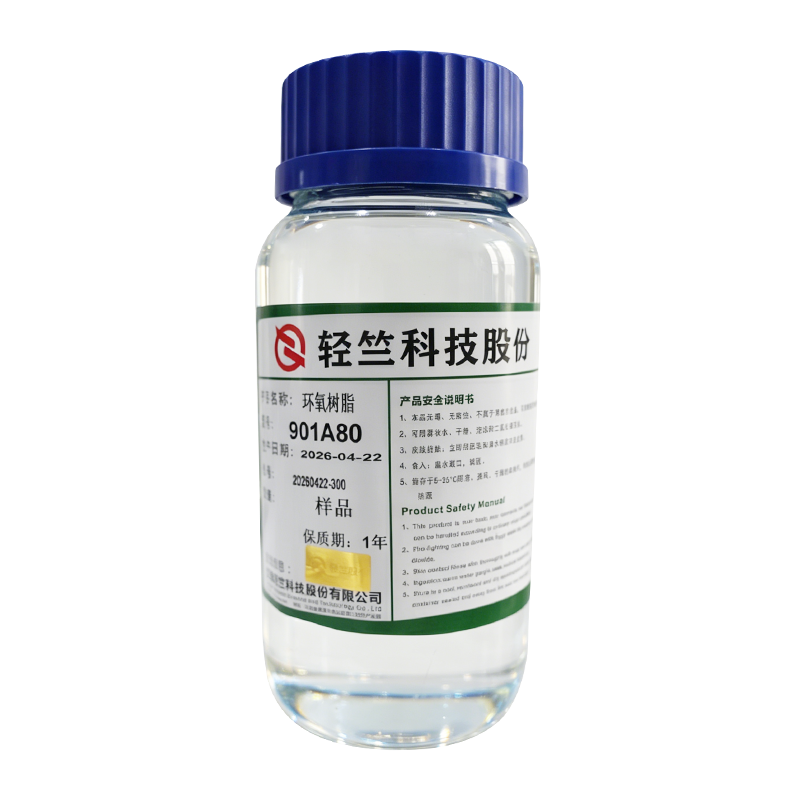 901A80 High-Temperature Specialty Liquid Epoxy ResinHigh-temperature epoxy with Tg ≥160°C and 150°C service, suited to elevated-temperature insulation and structural bonding where thermal margin is critical.View Product →
For teams mapping resin grades to specific end uses, the composite applications overview is a sensible starting point, and comparisons between the 128 series grades are set out in this technical guide to the 128 series.
Reading Results and Setting Acceptance Criteria
A test report is evidence, not a verdict. Turning it into an acceptance criterion follows a short sequence:
- Fix the load case and the service environment before selecting any standard.
- Match specimen geometry and fixture to that load case, and keep data from different fixtures separate.
- Reject coupons whose failure mode differs from the intended one, regardless of how favourable the number looks.
- Treat modulus and strength separately; modulus is far more repeatable and can be accepted on fewer specimens.
- Derive allowables with a statistical basis and apply environmental knockdowns rather than relying on a mean value.
- Retain witness coupons, raw load-displacement curves and failure photographs alongside the summary sheet.
A single impressive strength value with no fibre volume fraction, no failure mode and no conditioning record is not usable data. A modest value with all three is.
Practical Checks Before You Approve a Test Plan
- Ask for the alignment verification record, not just a calibration certificate for the load cell.
- Confirm tab adhesive, tab bevel geometry and bond quality, since most invalid tensile runs fail at the tab.
- Verify that coupons and reported fibre volume come from the same panel and the same cure cycle.
- Document conditioning time, temperature and moisture content before the coupon reaches the frame.
- Agree test speed and data acquisition rate in advance; coarse sampling hides the initial modulus slope.
- Require photographs of every fracture surface, because the failure mode is half the result.
Composite testing rewards planning more than equipment. Decide which failure you cannot afford, choose the standard that reproduces it, control the resin and cure upstream so the coupon is representative, and read the failure mode before you read the number. Do that consistently and the data will support decisions; skip it and even a well-equipped laboratory will hand back results that cannot be defended.
Related Product
-
-
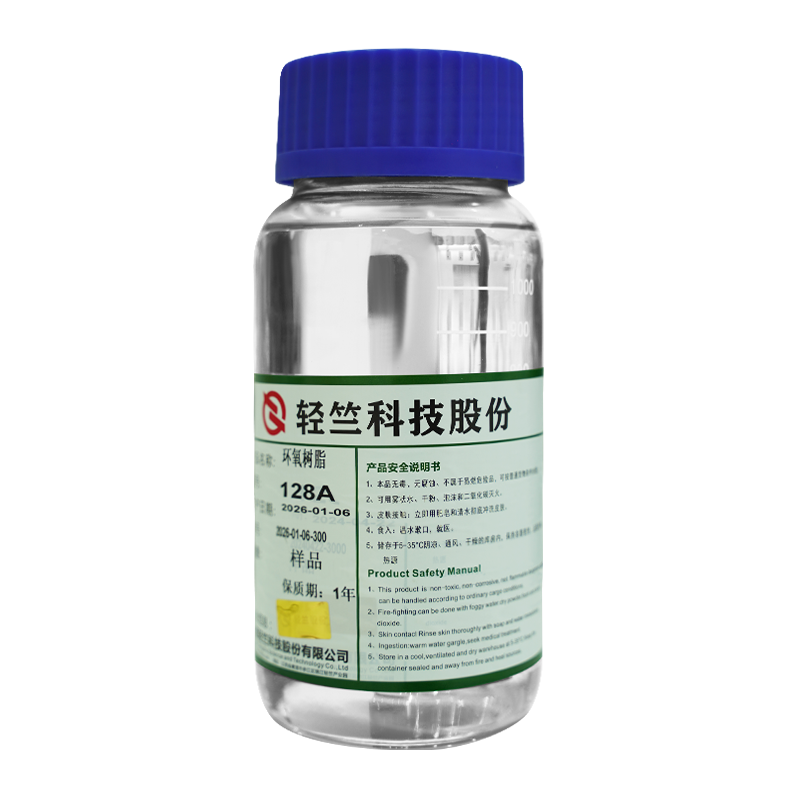
The 128A Standard Grade Liquid Epoxy Resin is a classic bisphenol A liquid resin offering a stable e...
+ VIEW MORE -
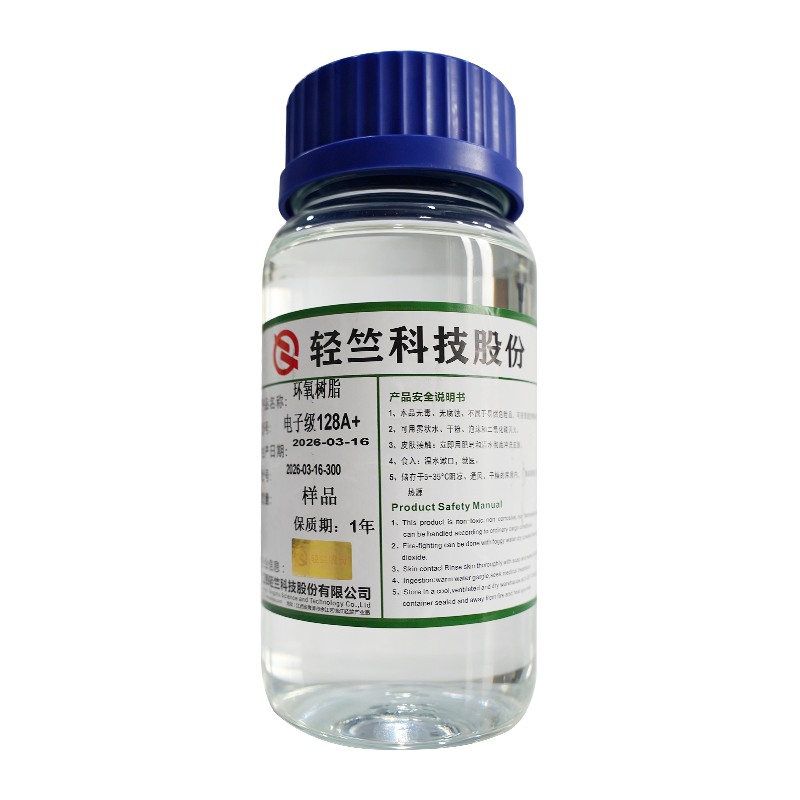
The 128A+ Electronic Grade Liquid Epoxy Resin is a high-purity bisphenol A liquid resin formulated f...
+ VIEW MORE -
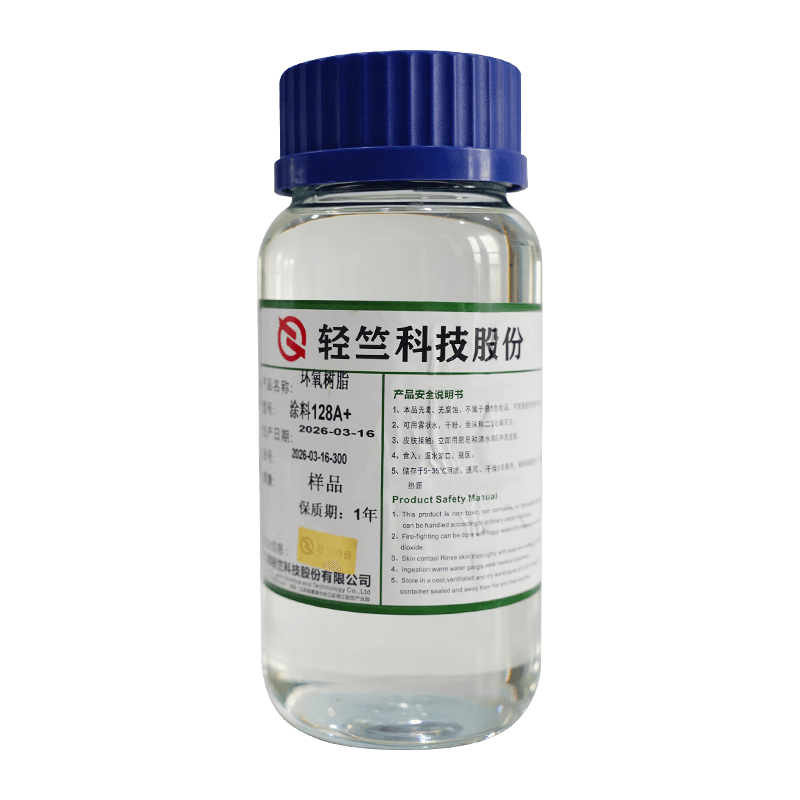
The 128A+ Coating Grade Liquid Epoxy Resin is a bisphenol A liquid resin specifically optimized for ...
+ VIEW MORE -
The 128B Low-Viscosity Liquid Epoxy Resin is the lowest-viscosity grade in the 128 Series. While ret...
+ VIEW MORE

Product Categories
Epoxy Resin 128 Series Epoxy Resin 601 Series Epoxy Resin 604 Series E44 General-Purpose Liquid Epoxy Resin E39D Low-Viscosity Transparent Liquid Epoxy Resin 450A80 High-Solids Flexible Liquid Epoxy Resin 901A80 High-Temperature Specialty Liquid Epoxy ResinContact
 [email protected]
 +86-15257130679
 Qingzhu Industrial Park, Yuanqu Avenue, Industrial Park, Yujiang District, Yingtan City, Jiangxi Province, China
