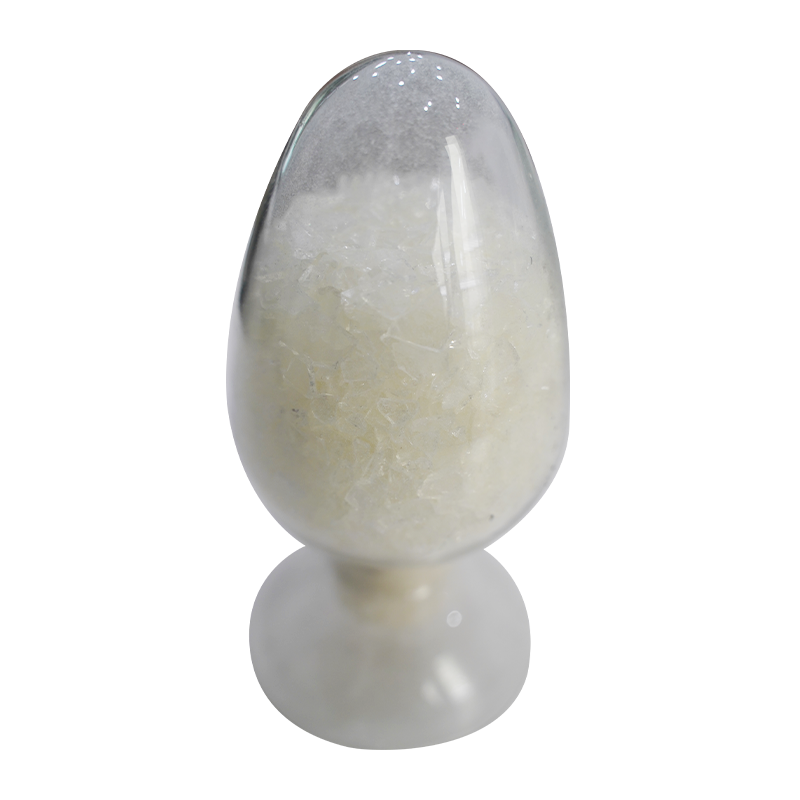
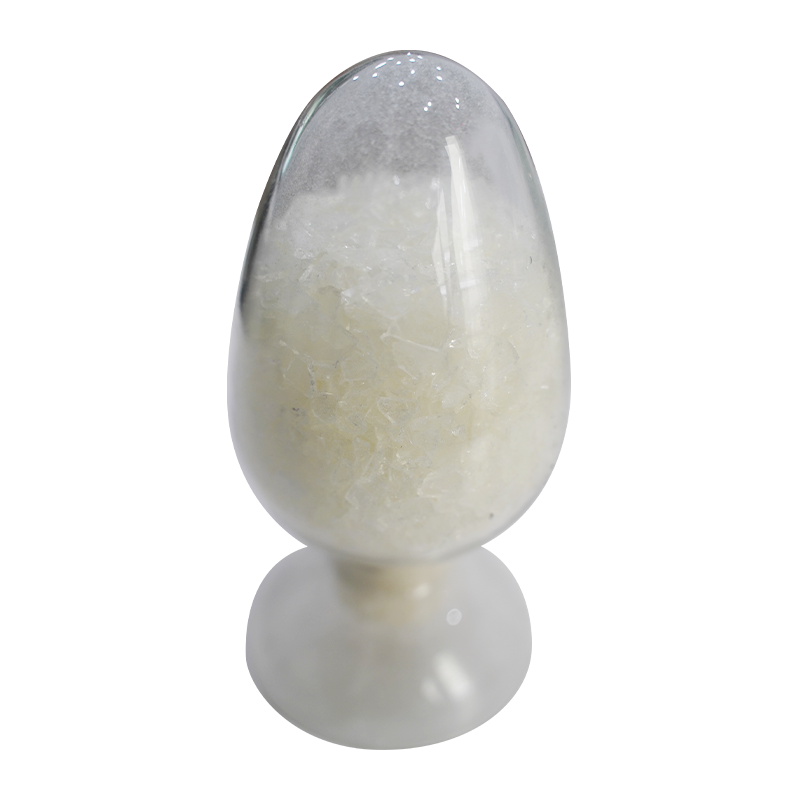
When evaluating Solid Epoxy Resin 604, technical teams generally need to look beyond the product name and examine how its physical and chemical characteristics affect downstream processing. Parameters such as epoxy equivalent weight, softening point, melt viscosity, color, hydrolyzable chlorine, inorganic chlorine, and volatile content can influence formulation design, coating appearance, curing behavior, and storage stability. For manufacturers using E-12 Epoxy Resin in powder coatings, protective coatings, adhesives, or other solid-resin systems, the relationship between these parameters is often more important than any single specification.
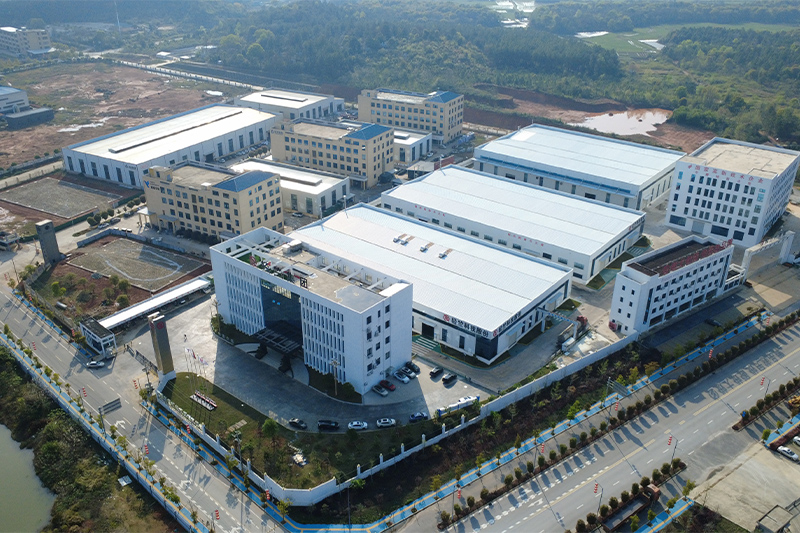
Jiangxi Qingzhu Technology Co., Ltd. has made epoxy resin a key area of development after years of experience in new materials and intelligent manufacturing. Qingzhu is a high-tech enterprise integrating new materials, packaging barrels, optical lens processing, and the R&D and production of epoxy resin. This diversified industrial foundation supports Jiangxi Qingzhu Technology Co., Ltd. in developing and refining products such as the Epoxy Resin 604 Series while placing strong emphasis on consistency and application performance.
Key Quality Indicators
- Epoxy equivalent weight affects stoichiometric calculations and the amount of curing agent required.
- Softening point influences melting behavior, processing temperature, storage characteristics, and powder-handling performance.
- Melt viscosity can affect flow, leveling, mixing, extrusion, and coating-film formation.
- Color and color stability are important where appearance and long-term visual consistency are required.
- Chlorine-related impurities may require particular attention in applications involving electrical insulation or demanding chemical environments.
Why Softening Point Matters for E-12 Epoxy Resin
The softening point of E-12 Epoxy Resin is an important practical parameter because solid epoxy resin must remain sufficiently stable during storage while becoming processable under controlled heating. If the softening characteristics are not appropriate for a formulation, problems may occur during transportation, storage, feeding, extrusion, or film formation. For powder coating manufacturers, the balance between storage stability and melting behavior is especially important because the resin needs to remain manageable as a solid before processing and then flow effectively during curing.
For this reason, Jiangxi Qingzhu Technology Co., Ltd. focuses not only on producing epoxy resin but also on improving product stability and functionality through R&D. The company's investment in advanced production equipment and fully automated workshops provides a manufacturing environment designed to support more consistent process control. This is particularly valuable for Solid Epoxy Resin 604, where relatively small variations in material characteristics can influence processing conditions.
Processing Factors Related to Softening Behavior
- Storage temperature should be controlled to reduce the risk of premature softening, blocking, or material agglomeration.
- Processing temperature should be sufficient for appropriate melting and flow without unnecessarily increasing thermal exposure.
- The curing system should be compatible with the resin's processing and reaction characteristics.
- Production equipment should provide stable temperature control to maintain repeatable melt-processing conditions.
Epoxy Equivalent Weight and Formulation Accuracy
Epoxy equivalent weight is one of the most useful parameters for designing formulations based on the Epoxy Resin 604 Series. It provides a basis for determining the theoretical amount of curing agent required to react with the epoxy groups. In practical production, formulators should consider the actual technical data of the selected grade rather than relying solely on a generic value associated with the product series.
For E-12 Epoxy Resin, accurate formulation is important because an inappropriate resin-to-curing-agent ratio can affect hardness, flexibility, adhesion, chemical resistance, heat resistance, and surface appearance. Jiangxi Qingzhu Technology Co., Ltd. therefore emphasizes technical development and product-quality improvement as part of its epoxy resin strategy. Application testing should still be performed by customers because the optimal formulation depends on curing-agent chemistry, additives, fillers, pigments, film thickness, curing temperature, and the intended end use.
Practical Formulation Variables
| Variable |
Main Influence |
Recommended Focus |
| Epoxy equivalent weight |
Curing-agent dosage and crosslinking balance |
Use current batch specifications |
| Softening point |
Storage and melt-processing behavior |
Match the processing system |
| Curing temperature |
Reaction speed and final crosslink density |
Establish a controlled curing profile |
| Additives and fillers |
Flow, toughness, appearance, cost, and functionality |
Verify compatibility experimentally |
Using Solid Epoxy Resin 604 in Powder Coating Formulations
Solid epoxy resins are widely used as important film-forming components in thermosetting powder coating systems. In this type of formulation, the resin must provide suitable melt flow, adhesion, mechanical strength, chemical resistance, and curing response. Solid Epoxy Resin 604 can be evaluated according to how effectively it integrates with curing agents, pigments, fillers, flow modifiers, and other formulation components.
The extrusion stage is particularly important. Resin and additives are heated and mixed under controlled conditions, after which the material is cooled, crushed, and classified into powder. Excessive processing temperature or residence time may affect the formulation, while insufficient mixing can lead to poor additive dispersion. Jiangxi Qingzhu Technology Co., Ltd. has invested in advanced manufacturing equipment and automated production facilities to strengthen process control and support stable epoxy resin production.
Powder Coating Process Points to Monitor
- Premixing should provide uniform distribution of resin, curing agent, pigments, fillers, and functional additives.
- Extrusion temperature and screw conditions should be selected to achieve adequate dispersion without excessive thermal stress.
- Cooling should be sufficiently controlled to produce consistent solidified material before grinding.
- Particle-size distribution should be monitored because it affects powder handling, application efficiency, and coating appearance.
Storage Stability of the Epoxy Resin 604 Series
Solid epoxy resin requires appropriate storage management to maintain predictable processing behavior. High temperatures can increase the tendency of solid resin particles to soften or agglomerate, while moisture and contamination can negatively affect downstream formulations. Packaging should remain intact, and storage areas should be clean, dry, and maintained within the supplier's recommended conditions.
Because Jiangxi Qingzhu Technology Co., Ltd. also operates in packaging barrel manufacturing, the company has experience across both material production and packaging-related manufacturing. This broader industrial capability complements its epoxy resin business and supports Qingzhu's objective of improving the overall reliability of material supply. For buyers of E-12 Epoxy Resin, appropriate packaging, transportation, and warehouse management should be considered together with resin specifications.
Recommended Warehouse Practices
- Keep solid epoxy resin in sealed original packaging until it is ready for use.
- Avoid direct sunlight and excessive heat during storage and transportation.
- Protect the material from moisture, dust, and contact with incompatible substances.
- Use suitable inventory rotation practices to minimize unnecessary long-term storage.
- Inspect packaging before use and confirm that the material remains free-flowing and uncontaminated.
Selecting an Epoxy Resin 604 Series Grade for a Specific Application
The best approach to selecting an Epoxy Resin 604 Series grade is to define the required finished-product performance first and then identify the resin characteristics needed to achieve it. For powder coatings, melt flow, curing response, adhesion, mechanical properties, and appearance may be priorities. For other solid-resin applications, thermal resistance, chemical resistance, electrical properties, or compatibility with specific curing agents may become more important.
Jiangxi Qingzhu Technology Co., Ltd. continues to focus on developing improved epoxy resin variants rather than treating resin production as a single standardized process. By combining professional R&D personnel, advanced production equipment, automated workshops, and a quality-oriented business philosophy, Qingzhu is working to provide more stable and application-focused materials. Customers considering E-12 Epoxy Resin or Solid Epoxy Resin 604 should use technical data, formulation trials, and actual application testing together when determining suitability.
Application Evaluation Checklist
- Define required coating, adhesive, electrical, mechanical, thermal, or chemical performance.
- Confirm the epoxy equivalent weight and softening-point range required for the formulation.
- Test compatibility with the selected curing agent and other formulation components.
- Evaluate melt flow, curing behavior, appearance, and finished-product properties under realistic processing conditions.
- Confirm batch consistency and technical support capability before moving to large-scale procurement.
Qingzhu's Long-Term Focus on Epoxy Resin Quality
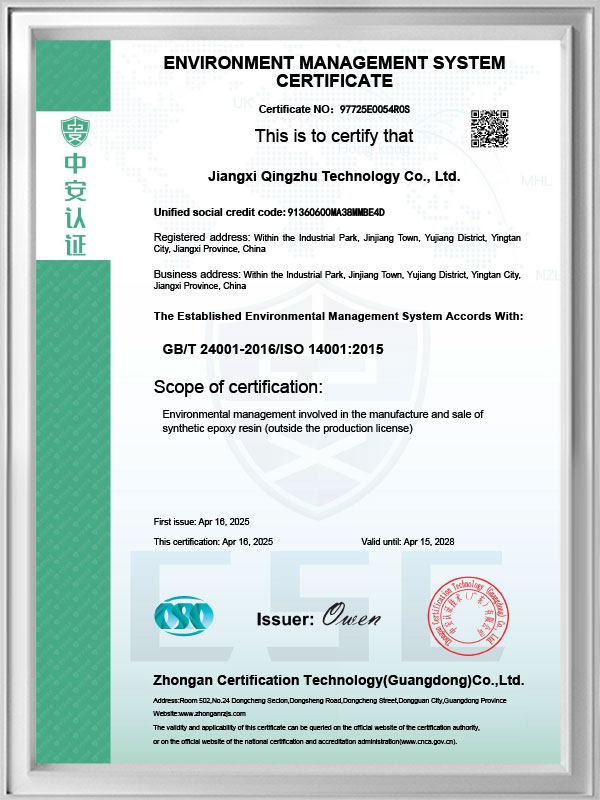
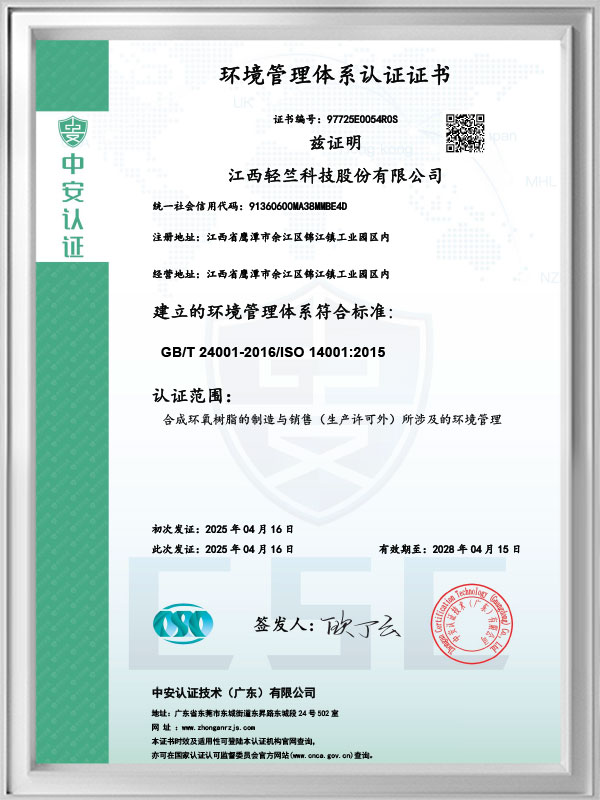
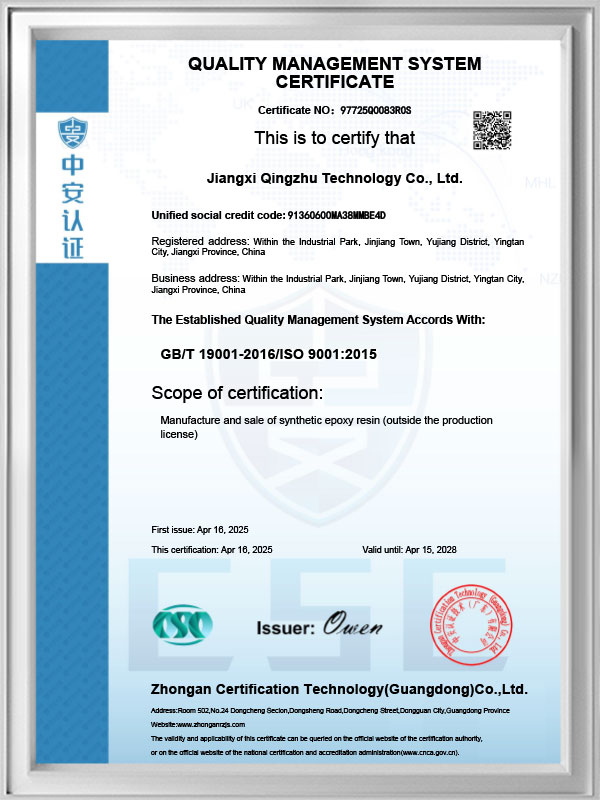
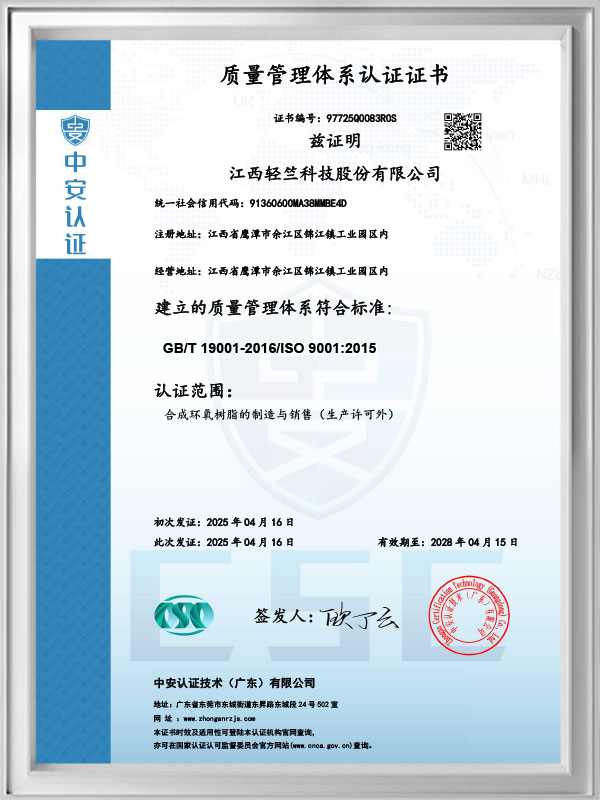
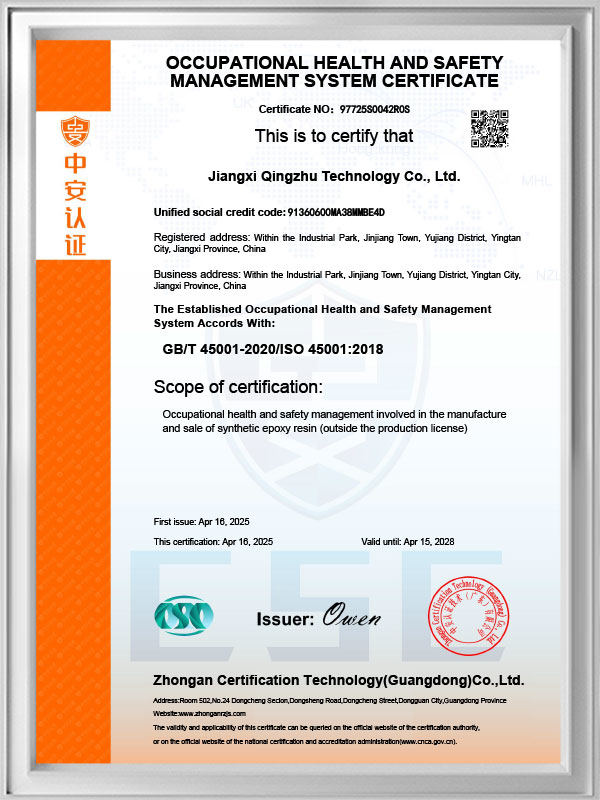
Jiangxi Qingzhu Technology Co., Ltd. has built its development around integrity, quality, innovation, and environmental responsibility. From its early focus on intelligent and environmentally friendly products to its current integration of new materials, packaging barrels, optical lens processing, and epoxy resin R&D and production, Qingzhu has continued to expand its technical and manufacturing capabilities. Epoxy resin is now a key focus, with the company actively working to improve existing products and develop better-performing variants.
For the Epoxy Resin 604 Series, E-12 Epoxy Resin, and Solid Epoxy Resin 604, consistent manufacturing and application-oriented development are essential to achieving reliable performance. Jiangxi Qingzhu Technology Co., Ltd. combines substantial production and R&D investment with advanced equipment, automated workshops, and a professional technical team to support this objective. Through continued innovation and attention to green manufacturing principles, Jiangxi Qingzhu Technology Co., Ltd. is positioned to further develop epoxy resin solutions that address practical industrial requirements while maintaining a strong commitment to quality and environmental responsibility.



 English
  русский
  عربى
عربى 



 +86-15257130679
  Qingzhu Industrial Park, Yuanqu Avenue, Industrial Park, Yujiang District, Yingtan City, Jiangxi Province, China