

 English
 русский
 عربى
The 601 Standard Grade Solid Epoxy Resin is the foundational general-purpose grade within the 601 Se...
+ VIEW MORE
 Industry News
Home / News & Share / Industry News / Carbon Fiber Wind Turbine Blade Recycling: Epoxy Resin and Fiber Recovery
Carbon Fiber Wind Turbine Blade Recycling: Epoxy Resin and Fiber Recovery
Qingzhu Technology – Born for Green, Driven for Tomorrow.
Content
- 1 Why Blade Recycling Is a Resin Problem Before It Is a Fiber Problem
- 2 Comparing the Main Recovery Routes
- 3 What Recovered Carbon Fiber Really Delivers
- 4 Designing Blades So the Epoxy Can Be Undone
- 5 Specifying Epoxy for Wind Energy Applications
- 6 Purchase Checks Before Committing to a Resin Batch
- 7 Where Recycled Fiber and New Epoxy Meet
A 60-metre blade taken down at end of service weighs somewhere between 12 and 15 tonnes, and a large share of that is cured epoxy composite that will never melt, soften in water or dissolve in a landfill. The carbon fiber inside the spar cap is genuinely worth recovering; most of the glass in the shell is not. That single fact sets the economics of every recycling project.
The conclusion first: carbon fiber wind turbine blade recycling succeeds or fails on resin chemistry and on fiber value, not on shredding capacity. A yard can reduce a blade to rubble in an afternoon. Whether the output becomes a sellable reinforcing fiber or cheap filler depends on how the resin was formulated, how the blade was assembled and which recovery route the processor runs.
Why Blade Recycling Is a Resin Problem Before It Is a Fiber Problem
A blade is a sandwich, not a solid slab. The spar cap usually carries pultruded carbon or glass laminate, the shell is glass-epoxy over balsa or PET foam, and the two half-shells are bonded with a structural adhesive. When a recycler starts cutting, the first task is separation rather than chemistry, and every additional interface pushes up the cost per tonne.
The resin is the harder obstacle. Amine-cured epoxy forms a three-dimensional crosslinked network that neither melts nor yields to common solvents. That is precisely why the material survives two decades of ultraviolet exposure, salt spray and fatigue loading. It is also why no mechanical process can hand back the original fiber length or reusable resin. Recovery must break covalent bonds, with heat or with chemistry, and every route makes a different trade between energy input and fiber quality.
Comparing the Main Recovery Routes
Most commercial operations today choose between five or six process families. They are not interchangeable, and the choice usually follows the fiber fraction in the scrap rather than the tonnage available.
| Route | How it works | Fiber outcome | Practical constraint |
|---|---|---|---|
| Mechanical grinding | Hammer mills and granulators reduce scrap to flakes; sieving and air classification split fiber-rich from resin-rich fractions. | Short, resin-contaminated, low aspect ratio; suitable as filler or bulk compound. | Low cost per tonne, but the powder competes with sand and chalk on price. |
| Pyrolysis | Scrap is heated to roughly 400–600 °C under inert gas; the resin decomposes into oil and gas while fiber remains. | Clean fiber with char residue and no sizing; strength typically 10–30 % below virgin. | Energy intensive; mixed glass and carbon streams must be sorted first; oxidation control decides quality. |
| Fluidised bed | Scrap enters a hot sand bed with air; resin burns off and fiber is carried out for separation. | Glass becomes a low-grade particulate; carbon fiber shortens considerably. | Strong energy recovery, weak fiber value retention. |
| Solvolysis | Supercritical water, alcohols or acid media dissolve the cured epoxy, usually above 250 °C. | Highest strength retention of the chemical routes; sizing and resin fully removed. | Solvent recovery, corrosion-resistant equipment and high cost per tonne. |
| Cement kiln co-processing | Whole or shredded blade replaces fuel and silica feedstock in a kiln. | No fiber recovery; the composite becomes clinker raw meal. | Widely available, but it destroys the carbon fiber value entirely. |
| Direct reuse | Blade sections are re-machined into poles, panels or noise barriers. | Fiber stays bonded in resin at full length. | Depends on design demand and certification; geometry limited to the donor blade. |
What Recovered Carbon Fiber Really Delivers
Pyrolysis is the most established thermal route, and it is honest about its limits. The fiber comes out clean but unsized and often slightly charred, so a re-sizing step is needed before it can be handled in a compounder. Because the tow is broken into shorter bundles, recovered carbon fiber rarely returns to a spar cap. It goes into nonwovens, bulk moulding compounds, injection-moulded parts and friction materials, where a discontinuous fiber is acceptable.
Chemical routes preserve more of the original tensile properties, which matters when the recovered fiber is meant to displace virgin material rather than simply avoid disposal. The trade-off is plant complexity: solvent recovery, acid handling and wastewater treatment all add capital cost, and mixed glass-carbon feedstock complicates the chemistry considerably.
This is where the material side of the chain becomes relevant. A blade built from a well-characterised laminate with a known resin content, a defined fiber areal weight and a predictable cure profile is far easier to recycle profitably than a blade assembled from whatever was available that month. Consistency upstream becomes recyclability downstream, which is why composite applications and their resin specifications deserve attention early in the design cycle. The composites application overview shows how resin grades map onto different laminate processes.
Designing Blades So the Epoxy Can Be Undone
Three design levers change the recycling outcome more than any downstream investment. The first is a cleavable network: epoxies built with ester or dynamic covalent linkages can be depolymerised in a solvent under milder conditions, recovering both fiber and a reusable oligomer stream. The second is a debondable structural adhesive, which lets the shell be split from the spar without cutting through the laminate. The third is material separation by design, so carbon and glass are not laminated into the same stack where avoidable.
None of these levers are free. A recyclable resin still has to match the mechanical baseline of the standard grade it replaces, especially in fatigue. Blade laminates see millions of load reversals, and toughness matters more than raw strength. That is the reasoning behind toughened solid grades such as the
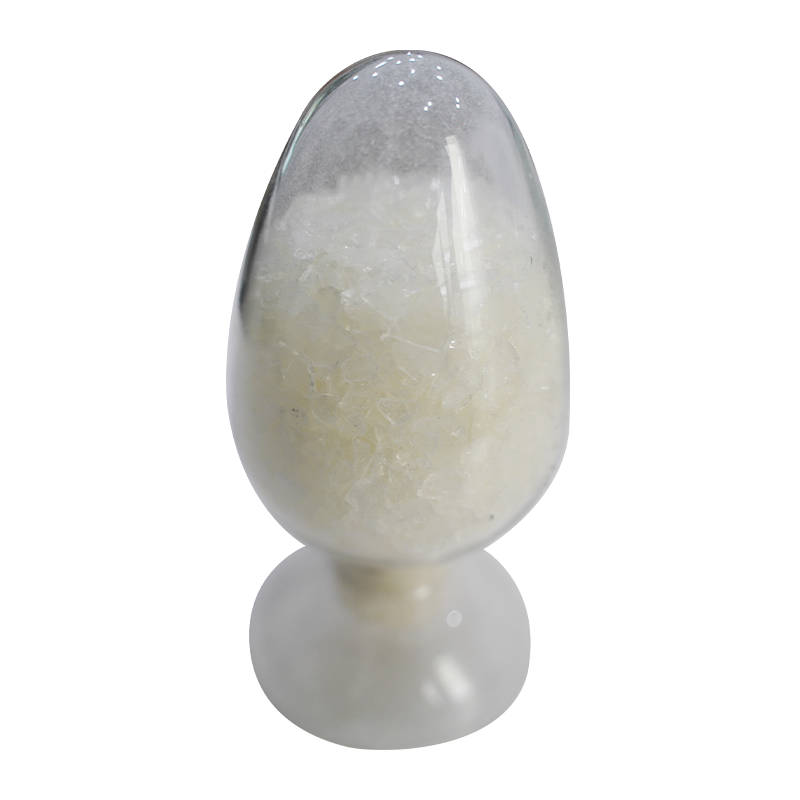 604 High-Toughness Solid Epoxy ResinFoundational 604 Series solid epoxy offers high impact strength and fatigue-crack resistance for blade laminates and structural bonding.View Product →
, which are formulated for laminates that must resist crack growth under repeated loading rather than a single design load.
Specifying Epoxy for Wind Energy Applications
Buyers in this segment tend to work from a short, hard list: mixed viscosity at 25 °C, gel time at infusion temperature, glass transition temperature both dry and after moisture conditioning, tensile modulus, elongation at break, exotherm in thick sections, and chloride content. A batch-to-batch viscosity band of about ±5 % is a reasonable expectation for infusion work, because a shift of a few tens of mPa·s visibly changes flow-front behaviour in a 100 mm root laminate.
Wet glass transition temperature is the figure that separates a serious supplier from a catalogue. A resin that reports a dry Tg of 90 °C may drop well below that after conditioning, and the design case is always the conditioned value. Where a hub component or tooling laminate must hold stiffness at elevated service temperature, a high-temperature specialty grade such as the
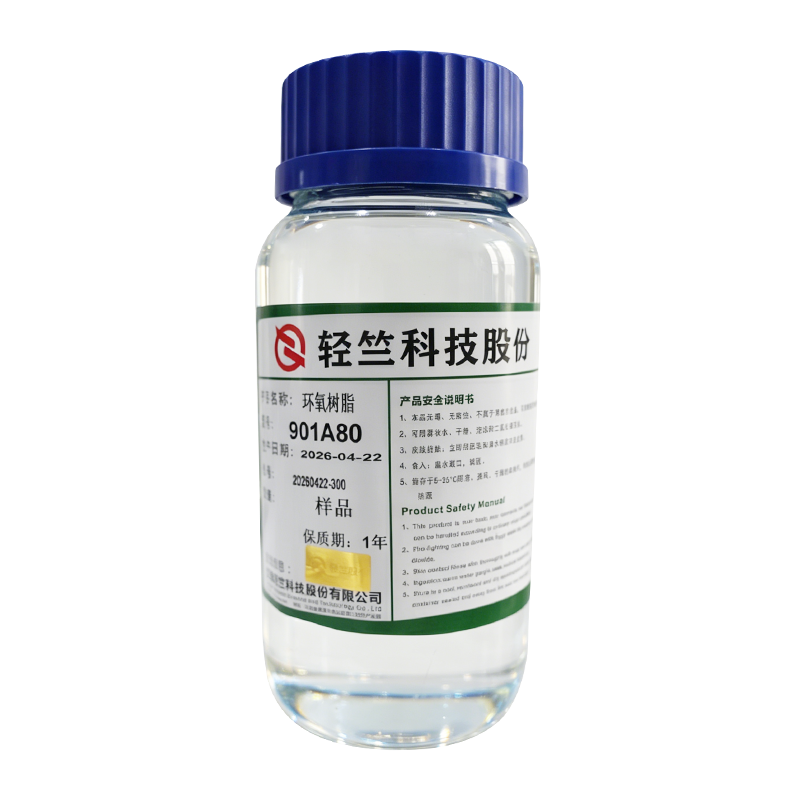 901A80 High-Temperature Specialty Liquid Epoxy ResinHigh-Tg liquid epoxy with 150°C continuous service and low dielectric loss; check cure schedule for demanding high-temperature electronics.View Product →
is the kind of product to evaluate against the cure schedule before committing.
Infusion behaviour is the other half of the specification. Thick laminates and tight process windows reward a low starting viscosity that wets out dense fiber bundles before gel time closes, which is the role of a low-viscosity transparent grade like the
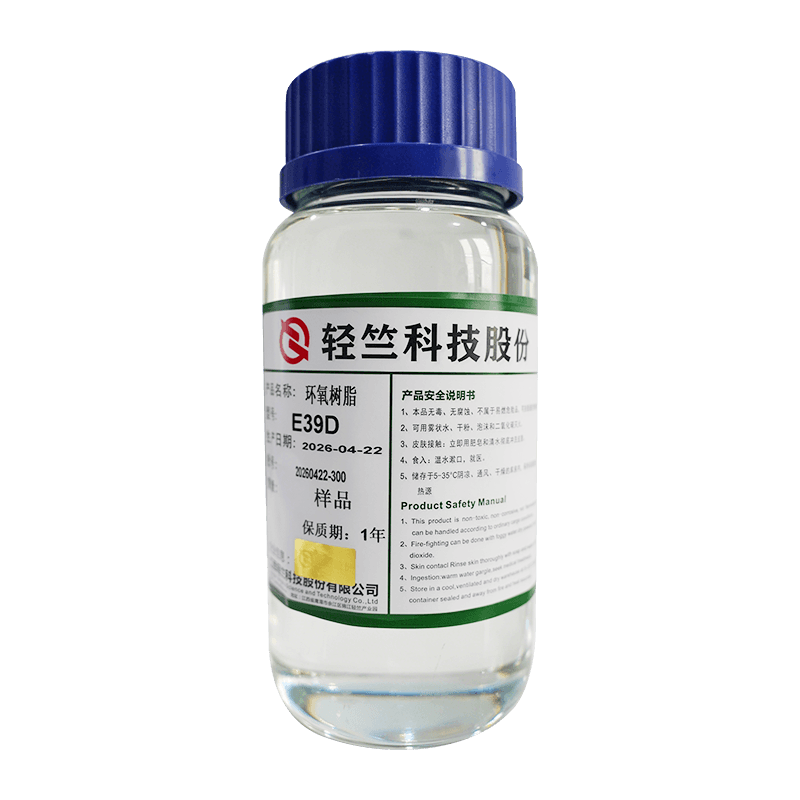 E39D Low-Viscosity Transparent Liquid Epoxy ResinLow-viscosity, high-clarity bisphenol A epoxy with minimal cure shrinkage for fast wet-out, transparent bonding and precision encapsulation.View Product →
. The wider wind energy application area sets out how these requirements differ between blade, nacelle and tooling work.
Purchase Checks Before Committing to a Resin Batch
When a recyclable or standard grade is on the table, the qualification work is mostly administrative and only slightly technical. Ask for the following before signing a supply agreement:
- Coupon test data from the same production lot that will ship, not from a development batch.
- Conditioned Tg after moisture exposure, with the test method and conditioning duration stated.
- A viscosity window with measured upper and lower limits, plus the temperature at which it was measured.
- Epoxy equivalent weight and residual chloride, since both affect cure consistency and corrosion risk.
- A resin content figure for the finished laminate, which determines what a recycler can realistically recover.
- A statement on how the cured resin behaves in pyrolysis and in solvolysis, ideally with a lab-scale trial.
Request two drums from different lots and run them side by side. Viscosity drift between lots is the most common cause of a good specification failing in production, and it is invisible on a certificate of analysis that reports only a midpoint value.
Where Recycled Fiber and New Epoxy Meet
The realistic near-term picture is a split stream rather than a closed loop. Long, high-value carbon from spar caps feeds chemical or optimised pyrolysis routes and returns as discontinuous reinforcement in moulding compounds. Glass-rich shell material goes to cement kilns or mechanical filling, where the fiber value is low but the disposal problem disappears. Blades built with cleavable epoxy networks sit outside that split, because both the fiber and part of the resin can be returned to the value chain.
For anyone specifying material today, the practical move is to treat recyclability as a datasheet property alongside Tg and viscosity, and to ask suppliers what evidence sits behind the claim. A blade that can be taken apart is designed, not discovered after the fact.
Related Product
-
-
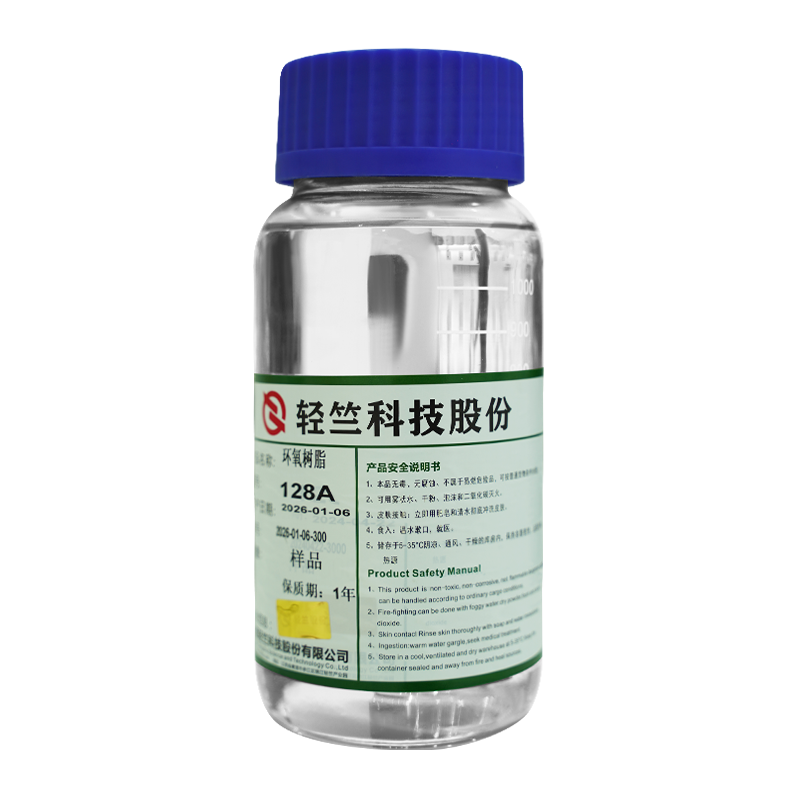
The 128A Standard Grade Liquid Epoxy Resin is a classic bisphenol A liquid resin offering a stable e...
+ VIEW MORE -
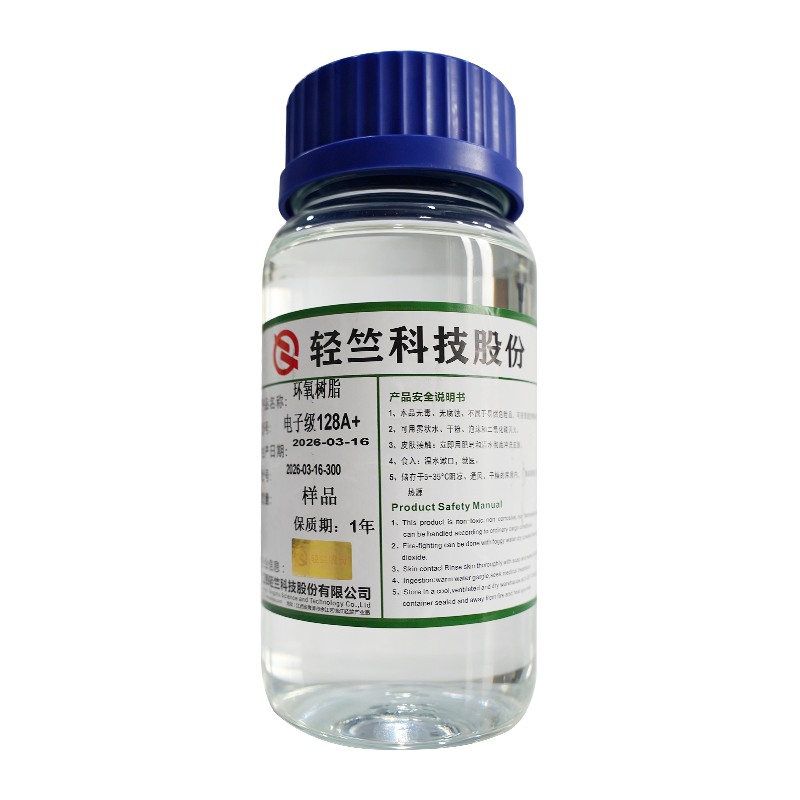
The 128A+ Electronic Grade Liquid Epoxy Resin is a high-purity bisphenol A liquid resin formulated f...
+ VIEW MORE -
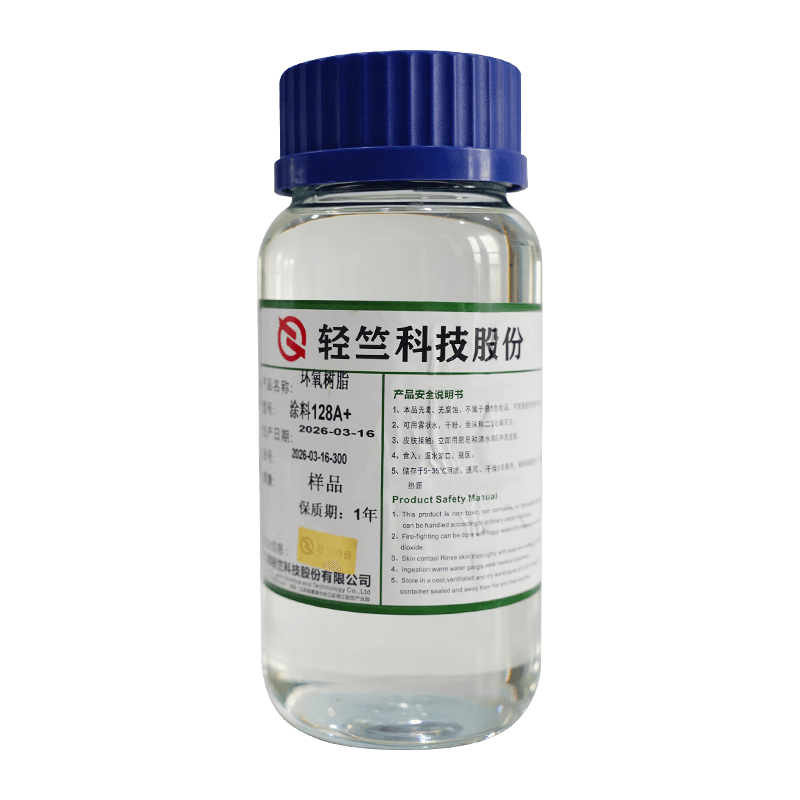
The 128A+ Coating Grade Liquid Epoxy Resin is a bisphenol A liquid resin specifically optimized for ...
+ VIEW MORE -
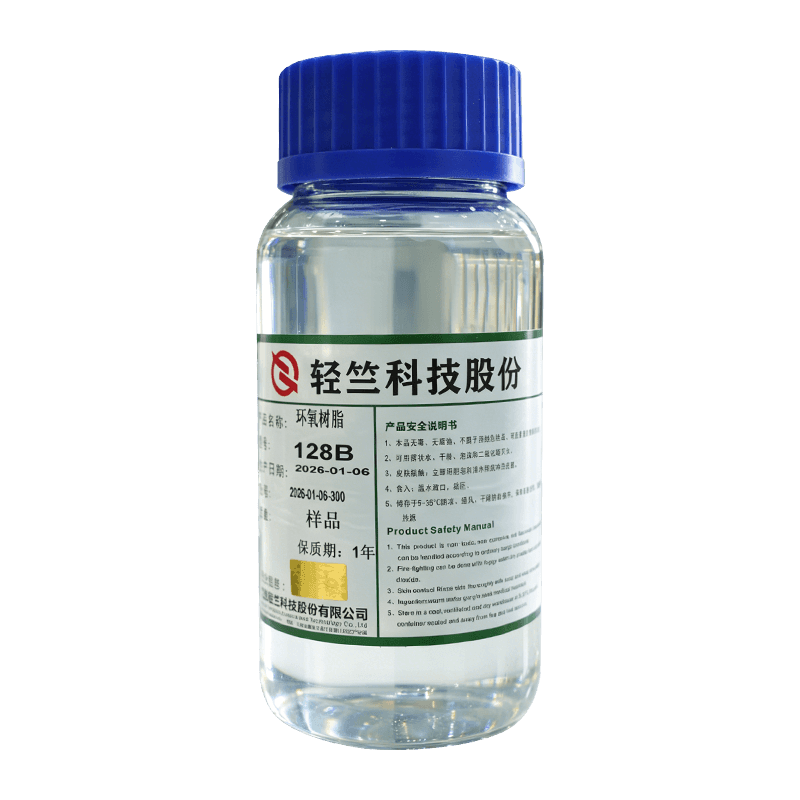
The 128B Low-Viscosity Liquid Epoxy Resin is the lowest-viscosity grade in the 128 Series. While ret...
+ VIEW MORE

Product Categories
Epoxy Resin 128 Series Epoxy Resin 601 Series Epoxy Resin 604 Series E44 General-Purpose Liquid Epoxy Resin E39D Low-Viscosity Transparent Liquid Epoxy Resin 450A80 High-Solids Flexible Liquid Epoxy Resin 901A80 High-Temperature Specialty Liquid Epoxy ResinContact
 [email protected]
 +86-15257130679
 Qingzhu Industrial Park, Yuanqu Avenue, Industrial Park, Yujiang District, Yingtan City, Jiangxi Province, China
