

 English
 русский
 عربى
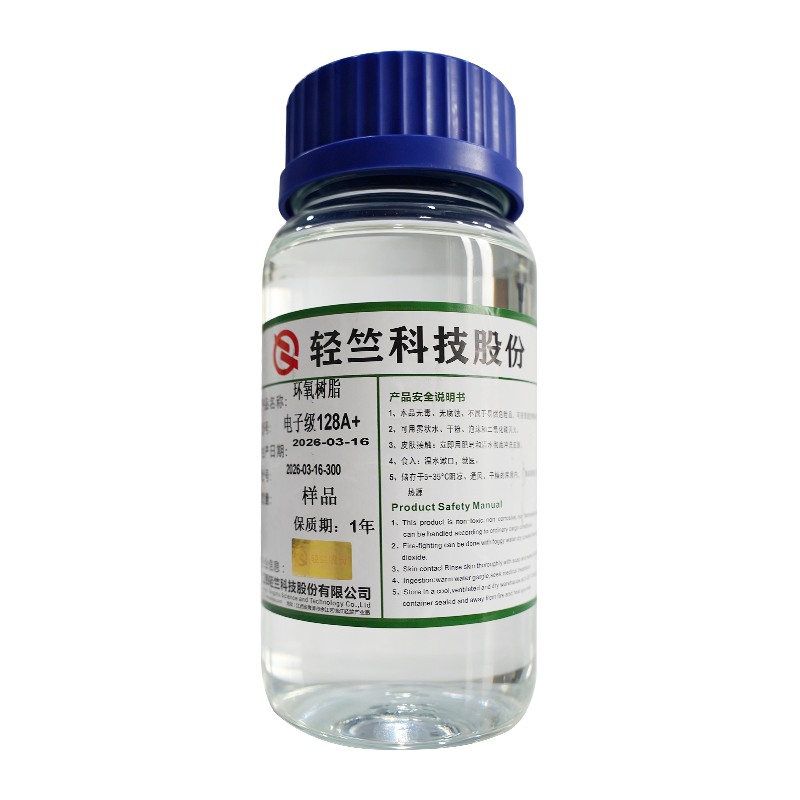
The 128A+ Electronic Grade Liquid Epoxy Resin is a high-purity bisphenol A liquid resin formulated f...
+ VIEW MORE
 Industry News
Home / News & Share / Industry News / Carbon Fiber Wind Turbine Blades: How Epoxy Resin Choice Shapes Performance
Carbon Fiber Wind Turbine Blades: How Epoxy Resin Choice Shapes Performance
Qingzhu Technology – Born for Green, Driven for Tomorrow.
Content
- 1 Why Carbon Fiber Earns a Place in a Wind Turbine Blade
- 2 Where Carbon Fiber Goes in a Blade, and Where It Does Not
- 3 The Epoxy Matrix Decides How Much Stiffness You Recover
- 4 Matching Epoxy Grade to the Blade Process
- 5 What to Verify Before You Qualify a Resin
- 6 Recycled Carbon Fiber and Blade End of Life
- 7 Sourcing Epoxy for a Carbon Fiber Wind Turbine Program
A blade engineer sizing a 95-meter rotor has two numbers on the desk: tip deflection under an extreme gust, and tower head mass. Carbon fiber improves both. It also costs roughly ten times more per kilogram than E-glass, which is why it never ends up in the whole shell.
The short answer up front: carbon fiber earns its cost in the spar cap, the epoxy matrix decides how much of the fiber's stiffness you actually recover, and the most common reason a carbon program underperforms is a resin system picked on price instead of on wet-out, cure profile and fatigue behavior.
Why Carbon Fiber Earns a Place in a Wind Turbine Blade
Blade length is limited by stiffness, not by strength. A blade that deflects too far under load risks tower strike, and the usual fix, adding more glass, adds mass exactly where mass hurts most. Every extra kilogram outboard increases gravity-fatigue loading at the root, which then pushes up tower and foundation cost.
Carbon fiber breaks that loop. Standard-modulus carbon fiber sits near 230 GPa in tensile modulus at a density around 1.8 g/cm3, while E-glass is roughly 73 GPa at 2.55 g/cm3. On paper, a carbon spar cap needs about a quarter of the mass of a glass one at equal bending stiffness. Real laminates land higher than that, because fiber volume fraction, off-axis plies and the resin's own low modulus all dilute the gain.
Two side effects travel with the weight saving. Carbon fiber conducts electricity, so lightning protection has to be re-validated whenever a carbon spar cap enters a design, since the cap can become a preferred path for strike current. And carbon fiber is comparatively brittle in compression, which means compressive strength and fiber waviness govern the design far more than headline tensile data suggest.
Where Carbon Fiber Goes in a Blade, and Where It Does Not
Very few commercial blades are all-carbon. The material is placed selectively, and the placement follows the bending moment:
- Spar caps, built as pultruded carbon planks or thick unidirectional laminates running along the blade axis on both the suction and pressure side.
- Root transitions and stud interfaces, where local stiffness and bolt loads justify the cost.
- Leading-edge reinforcement on very long blades, in some designs.
- Not the shell skin, which stays glass for cost, impact tolerance and surface finish.
- Not the shear webs, which normally use glass laminate over PET, PVC or balsa core.
Spar caps are usually assembled from pultruded planks bonded into the laminate rather than laid up as dry fabric. Pultrusion delivers a high fiber volume fraction and low waviness, both of which protect compressive strength. It also moves the resin decision upstream: the plank supplier's resin is locked in before the blade manufacturer ever handles the laminate.
| Reinforcement | Density (g/cm3) | Tensile modulus (GPa) | Tensile strength (MPa) | Relative cost index |
|---|---|---|---|---|
| E-glass | 2.5-2.6 | 72-76 | 3,400 | 1 |
| Standard-modulus carbon | 1.75-1.80 | 230 | 3,500-4,900 | about 10 |
| High-modulus carbon | 1.80-1.85 | 350-400 | 2,500-4,500 | 20 and above |
The Epoxy Matrix Decides How Much Stiffness You Recover
Carbon fiber tow is stiff, brittle and tightly packed, typically 12,000 to 50,000 filaments in a bundle. The resin has to penetrate between those filaments and displace the air travelling with them. Where it fails, you get voids, dry spots and resin-rich pockets. All three shorten fatigue life long before they appear as a stiffness number in a test report.
Wet-out and viscosity during infusion
A low mixed viscosity helps resin move through a dense carbon preform, but viscosity that drops too far can drain from vertical sections and leave the top of a spar cap resin-starved. For vacuum infusion of carbon laminates, a mixed viscosity in the low hundreds of millipascal-seconds at the infusion temperature, paired with a gel time long enough to fill the largest part in the tool, is a realistic working window.
Cure, glass transition and fatigue
Blade laminates see thermal cycling from surface temperatures well below freezing in service up to exotherm peaks during cure. The cured resin's glass transition temperature has to sit above the highest temperature the blade will meet, with margin for the thick-section exotherm that a root laminate generates. A resin that meets its glass transition value in a thin test coupon but not in a 60 mm root section is a known failure pattern.
The same wet-out and cure logic applies across composite laminates in general, whether the part is a spar cap, a pressure vessel or a structural panel, which is why resin families are usually qualified once and then re-tuned per process.
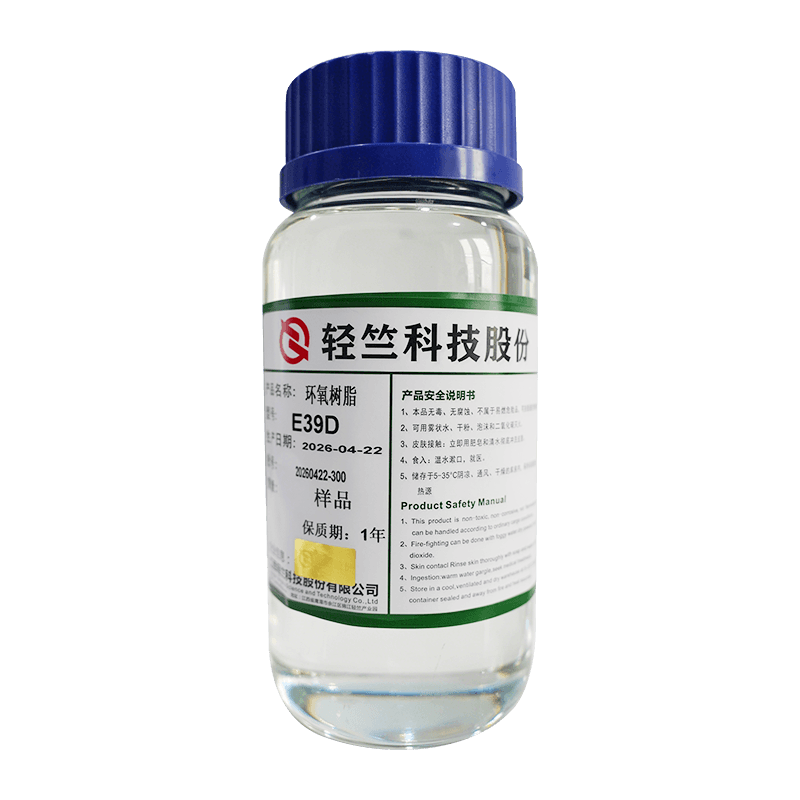 E39D Low-Viscosity Transparent Liquid Epoxy ResinHigh-clarity, low-shrinkage epoxy for precision bonding and transparent encapsulation, with low viscosity and fast cure for appearance-critical parts.View Product →
Suppliers serving composite laminates typically offer both a low-viscosity infusion grade for wet-out and tougher, higher-temperature grades for the cured performance the structure needs.
Matching Epoxy Grade to the Blade Process
There is no single wind blade resin. The process dictates the grade, and the grade dictates what the datasheet has to prove.
| Process | Resin form | What matters most | Typical failure mode |
|---|---|---|---|
| Pultrusion of spar cap planks | Liquid | Low mixed viscosity in the bath, fast cure in the die, low volatile content | Voids and dry fiber at high line speed |
| Vacuum infusion of shell and root | Liquid | Long gel time, low exotherm in thick sections, complete wet-out of dense fabric | Exotherm cracking in the root, resin-starved top laminate |
| Prepreg and towpreg for spar caps | Solid or high viscosity | Tack, drape, controlled B-stage, consistent resin content | Resin-rich areas and uneven fiber volume |
| Filament winding of root studs and hubs | Liquid | Controlled gel time, wet-out under tension | Resin-rich pockets and unbalanced cure |
The spar cap sits at the intersection of two processes. Planks are pultruded in a continuous die at line speeds that leave seconds, not minutes, for cure, and the finished plank is then bonded into an infused or prepreg laminate. A system that cures too quickly in the die produces brittle, micro-cracked planks; one that cures too slowly caps line speed and pushes cost per meter upward.
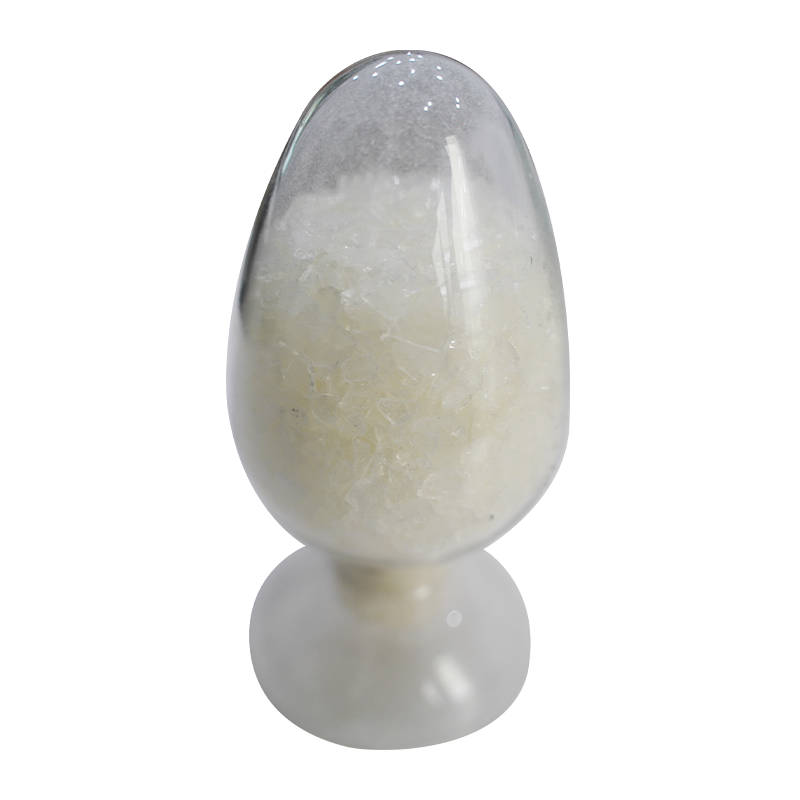 604 High-Toughness Solid Epoxy ResinA high-molecular-weight solid epoxy for impact-resistant structural bonding, composite toughening, and protective systems needing toughness, low cure stress, and thermal stability.View Product →
What to Verify Before You Qualify a Resin
Carbon programs fail on details that a one-page datasheet tends to hide. Ask for the following before committing to a production lot:
- Epoxy equivalent weight, plus its batch tolerance. It sets stoichiometry, and a wide window quietly shifts cure behavior from lot to lot.
- Mixed viscosity measured at the actual infusion or bath temperature, not at 25 C, because the number you process against is the hot one.
- Gel time and exotherm peak for the thickest section in the part, not for a 4 mm casting.
- Glass transition temperature of the fully cured system, together with the cure schedule that achieves it.
- Neat resin fracture toughness and fatigue crack growth data, not only tensile strength and elongation.
- Batch-to-batch consistency evidence covering several production lots, since a single certificate tells you nothing about repeatability.
Thick root laminates are where exotherm becomes a genuine risk: a large mass of curing resin insulates itself, and the peak temperature can overshoot the intended cure temperature by tens of degrees. A high-temperature specialty grade with a controlled cure profile is the usual route to holding glass transition above that peak without internal cracking.
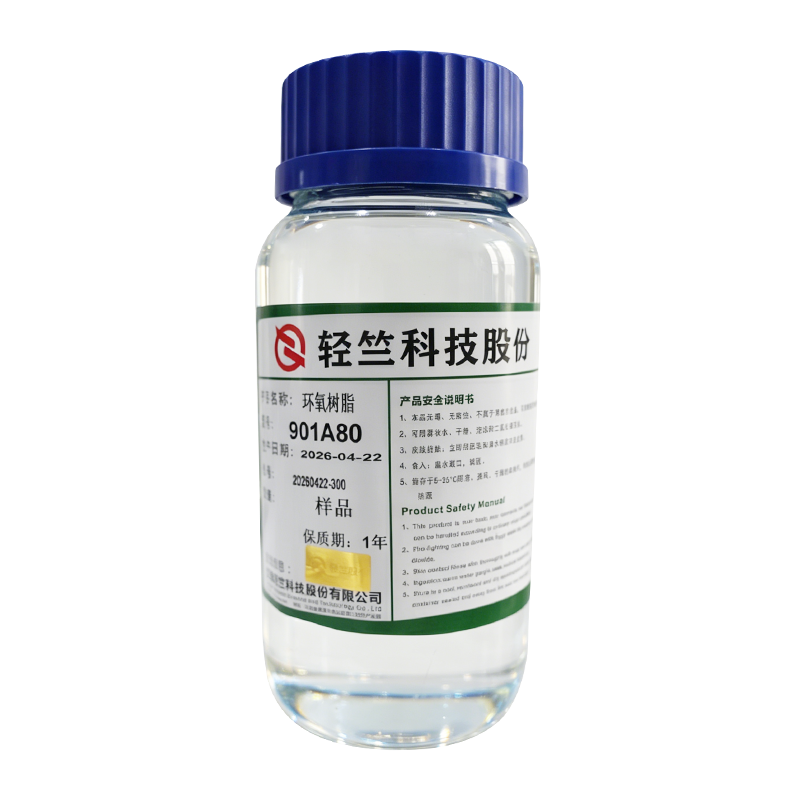 901A80 High-Temperature Specialty Liquid Epoxy ResinA high-Tg liquid epoxy for elevated-temperature insulation, potting, and structural bonding where thermal, chemical, and radiation resistance are required.View Product →
Recycled Carbon Fiber and Blade End of Life
Thermoset composites cannot be remelted, so a carbon spar cap is effectively locked into the blade once cured. Pyrolysis reclaims carbon fiber from decommissioned aircraft and automotive parts, and the recovered fiber has started to appear in non-structural applications. Reclaimed fiber loses some modulus and strength and carries a higher variability than virgin tow, so it rarely qualifies for a primary spar cap today.
For blades that reach end of service, cement kiln co-processing and mechanical size reduction remain the most available routes, with re-use in civil structures and noise barriers gaining ground. Design decisions made at the laminate stage, such as keeping the carbon spar cap as a separable element rather than co-bonding it into a single solid laminate, make downstream recovery considerably cheaper.
Sourcing Epoxy for a Carbon Fiber Wind Turbine Program
The resin is a smaller line item than the carbon fiber, but it controls whether the fiber performs. A supplier who can provide a low-viscosity infusion grade, a toughened solid grade for pultrusion or prepreg, and a high-temperature specialty grade from the same quality system removes one interface from the qualification chain, which matters when a blade program is running on a fixed certification schedule.
Ask for the process window in writing, the batch tolerance on epoxy equivalent weight, and a cure schedule matched to your thickest section. Suppliers with a track record in wind energy components will recognize the request immediately, and that is usually the fastest signal that the conversation is technically grounded.
Related Product
-
-
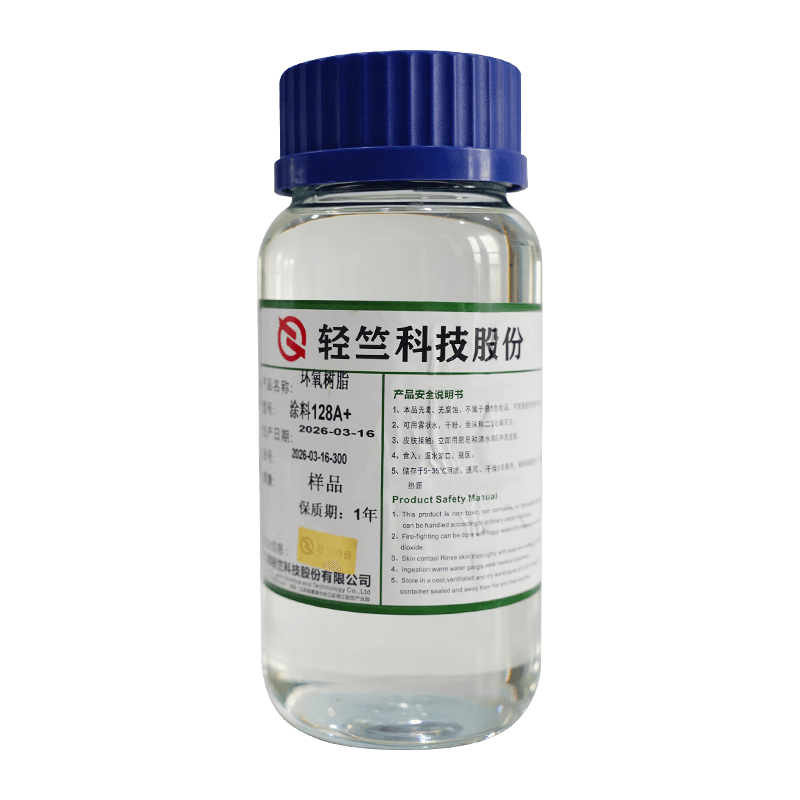
The 128A+ Coating Grade Liquid Epoxy Resin is a bisphenol A liquid resin specifically optimized for ...
+ VIEW MORE -
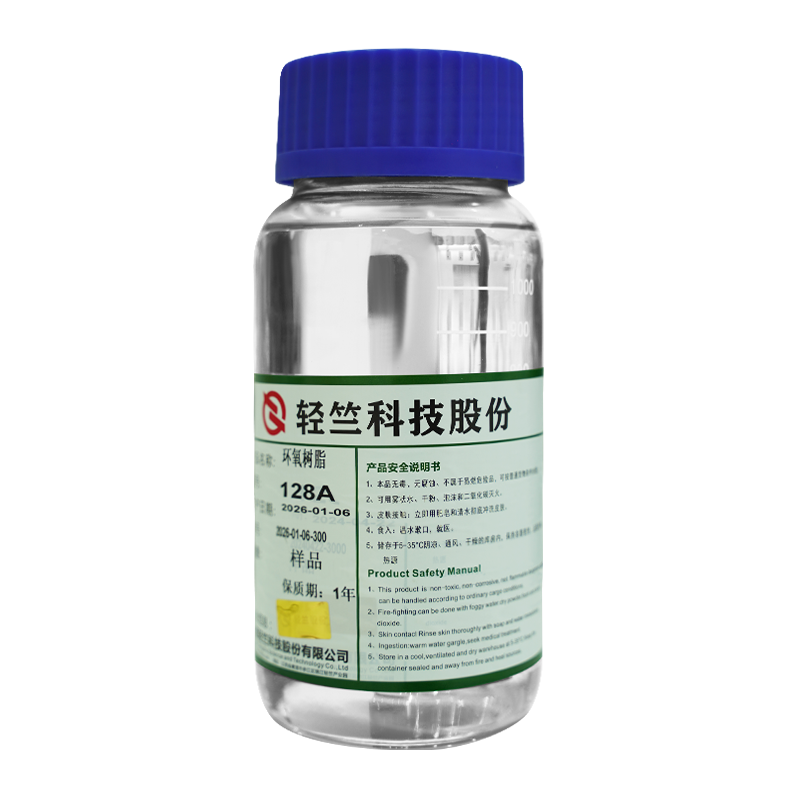
The 128A Standard Grade Liquid Epoxy Resin is a classic bisphenol A liquid resin offering a stable e...
+ VIEW MORE -
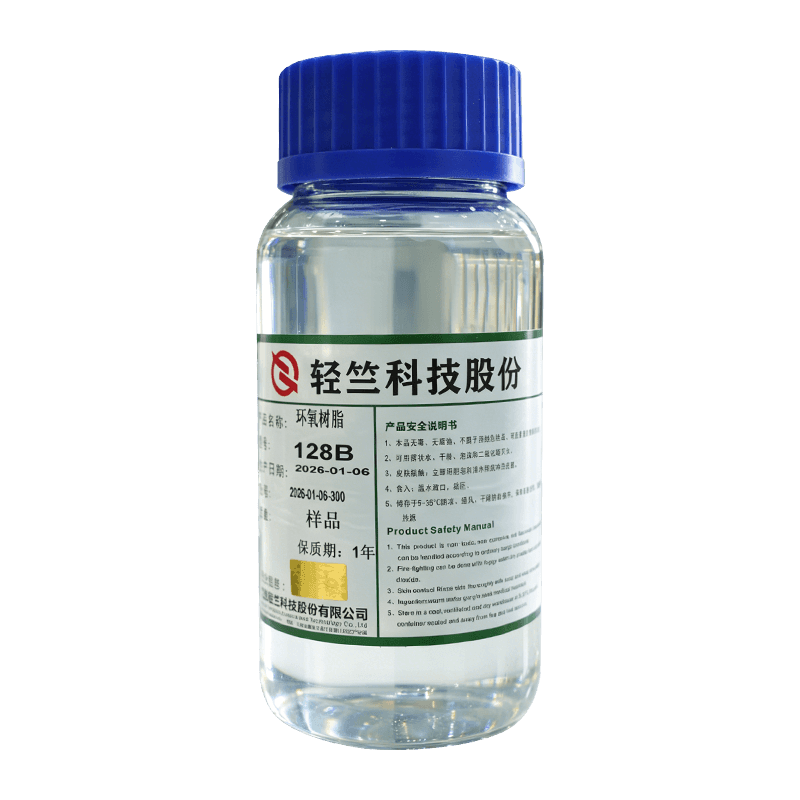
The 128B Low-Viscosity Liquid Epoxy Resin is the lowest-viscosity grade in the 128 Series. While ret...
+ VIEW MORE -
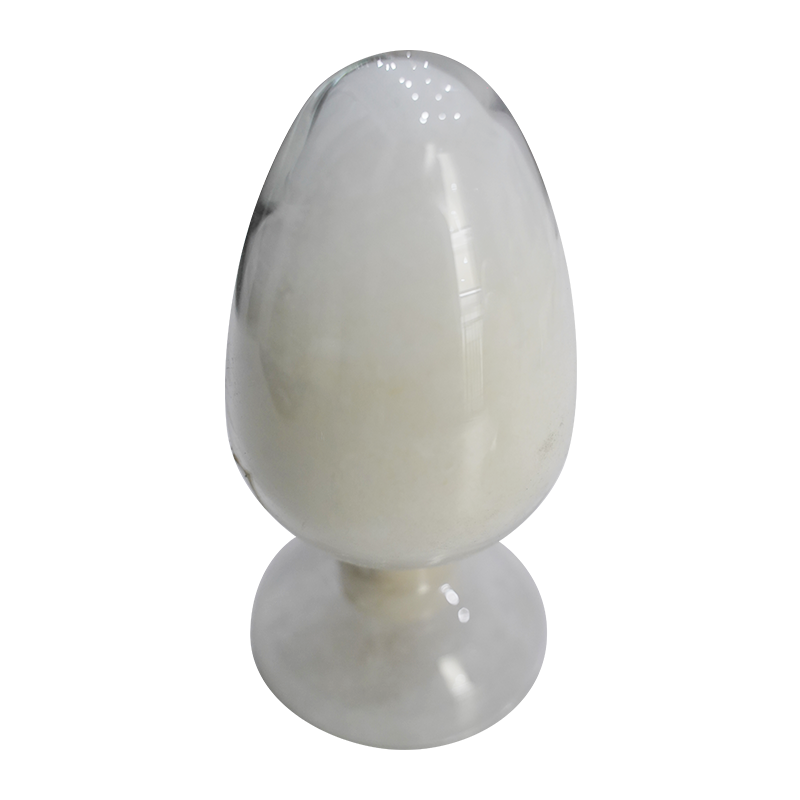
The 601R Electronic Grade Solid Epoxy Resin is a bisphenol A medium-molecular-weight solid resin pro...
+ VIEW MORE

Product Categories
Epoxy Resin 128 Series Epoxy Resin 601 Series Epoxy Resin 604 Series E44 General-Purpose Liquid Epoxy Resin E39D Low-Viscosity Transparent Liquid Epoxy Resin 450A80 High-Solids Flexible Liquid Epoxy Resin 901A80 High-Temperature Specialty Liquid Epoxy ResinContact
 [email protected]
 +86-15257130679
 Qingzhu Industrial Park, Yuanqu Avenue, Industrial Park, Yujiang District, Yingtan City, Jiangxi Province, China
