

 English
  русский
  عربى
عربى The 128A+ Electronic Grade Liquid Epoxy Resin is a high-purity bisphenol A liquid resin formulated f...
+ VIEW MORE
 Industry News
Home / News & Share / Industry News / Aerospace Surface Protection with Epoxy Resins: Material Selection Guide
Aerospace Surface Protection with Epoxy Resins: Material Selection Guide
Qingzhu Technology – Born for Green, Driven for Tomorrow.
Content
An aircraft skin does far more than shape the airframe; it is the barrier between critical structure and an environment that is chemically aggressive, thermally extreme, and physically erosive. During a single flight cycle, the surface can move from +50°C ground heat to -55°C stratospheric cold in minutes, then face rain, runway debris, fuel, hydraulic fluid, and de-icing agents in quick succession. When the protective system fails, corrosion starts beneath the paint, and a cosmetic defect becomes a structural liability. Epoxy resins carry most of the responsibility for preventing that sequence, because they supply the adhesion, barrier properties, and mechanical resilience that aerospace surface protection depends on. Choosing the right epoxy grade is therefore not a formulation detail; it is the foundation of the whole protective system.
What Aerospace Surface Protection Must Withstand
Saying that a coating should "protect the airframe" is too vague to guide material selection. The resin must survive a defined set of exposures, and each one affects a different aspect of polymer performance.
- Thermal cycling: The surface moves between +50°C and -55°C every flight. A cured resin system must tolerate this cycle without microcracking or losing adhesion.
- UV and oxidation: Years of sunlight degrade molecular chains at the surface, so the resin needs inherent resistance or compatibility with stabilizers.
- Chemical attack: Jet fuel, hydraulic fluid, de-icing glycol, and salt spray all contact the surface. Each can soften or swell a poorly selected resin.
- Erosion: Rain impact at high speed, sand, and runway abrasion wear down unprotected film. Toughness and hardness are both required.
- Corrosion promotion: At scribes and fastener edges, the coating system is only as good as the barrier it forms; moisture ingress must be stopped quickly.
A resin that fails any of these tests creates more than an aesthetic problem. It extends inspection intervals, raises maintenance cost, and can compromise the fatigue life of the airframe. The properties of the chosen epoxy resin determine where the finished system is strong and where it is vulnerable.
Epoxy Resin Properties That Drive Aerospace Performance
Formulators evaluating epoxy resins for aerospace surface protection usually compare a short list of measurable properties. Each one maps directly to a failure mode, so the comparison should be methodical rather than based on datasheet marketing claims.
| Property | Why It Matters | Evaluation Approach |
|---|---|---|
| Viscosity | Controls application method, film thickness, and penetration into surface profiles. | Rotational viscometer at the temperature the formulator will actually use. |
| Glass transition temperature (Tg) | Marks the temperature above which the cured resin loses mechanical stiffness. | DSC or DMA on the cured system, not on the liquid resin. |
| Chemical resistance | Determines behavior in contact with hydraulic fluid, fuel, and cleaning solvents. | Immersion testing or documented compatibility data. |
| Adhesion | Keeps the protective layer bonded to aluminum, composite, or steel substrates. | Pull-off and tape adhesion tests on prepared surfaces. |
| Flexibility and toughness | Prevents cracking during thermal expansion, impact, and structural flex. | Bend tests, impact tests, and elongation measurements. |
| Color and clarity | Affects topcoat appearance and the reliability of inspection processes. | Gardner color scale or comparable visual standard. |
Aerospace qualification typically goes further and includes testing against OEM or military specifications. The resin manufacturer's role is to deliver a consistent starting material that lets the formulator achieve those qualifications without re-engineering the chemistry.
Choosing the Right Resin Format for the Application
The same protective requirements can be satisfied with liquid or solid epoxy resins, and the format determines application methods, pot life, cure schedules, and solvent content. Matching the format to the workflow is as important as matching the chemistry to the environment.
Coating-Grade Liquid Epoxy Resins for Primers
Liquid epoxy resins are the workhorse of primer and coating formulations because they flow easily, accept a wide range of curing agents, and form high-adhesion films. A coating-grade liquid resin such as the 128A coating-grade liquid epoxy resin provides the epoxy equivalent weight and low hydrolyzable chlorine content needed for predictable cure and consistent film performance.
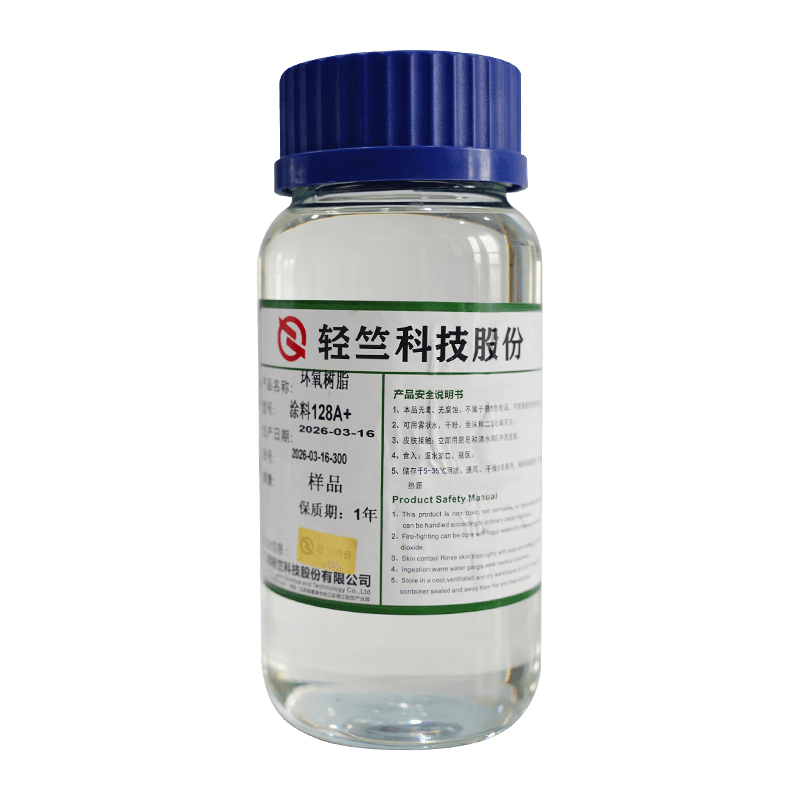 128A+ Coating Grade Liquid Epoxy Resin for Industrial CoatingsThis bisphenol A liquid resin offers low viscosity, low hydrolyzable chlorine, and 100% active content, ensuring reliable cure and adhesion for heavy-duty, marine, and flooring systems.View Product →
The 128 series is widely documented in industrial coatings because of its balanced properties and commercial availability. Qingzhu's 128-series technical guide covers the property ranges and formulation implications in more detail.
High-Temperature Liquid Epoxies for Heat-Exposed Areas
Engine bays, exhaust-adjacent panels, and fasteners near heat sources expose the protective layer to temperatures above the working range of conventional bisphenol A epoxies. A high-temperature specialty liquid epoxy resin raises the crosslink density of the cured system, allowing it to maintain hardness and adhesion where standard resins soften.
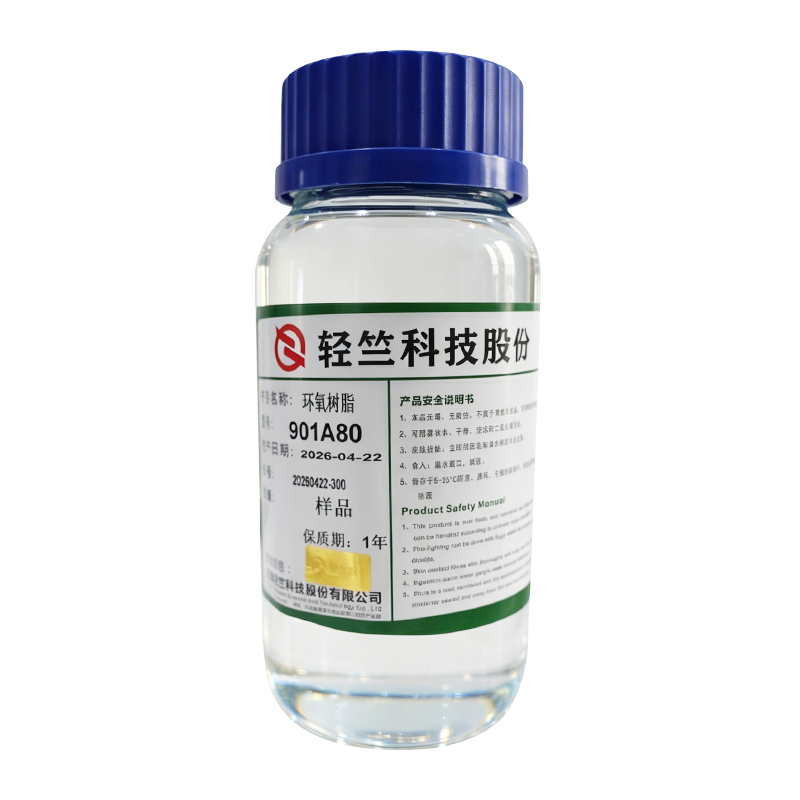 901A80 High-Temperature Specialty Liquid Epoxy ResinWith a Tg of ≥160°C and continuous service at 150°C, this resin maintains hardness and insulation in high-heat environments, suitable for EV, aerospace, and nuclear applications.View Product →
Solid Epoxy Resins for High-Tg and Powder Systems
When solvent emission limits push formulators toward powder coatings or high-solids systems, solid epoxy resins become the practical choice. The softening point of a solid resin has a direct influence on the glass transition temperature of the cured film, and high-temperature solid grades extend the service envelope further.
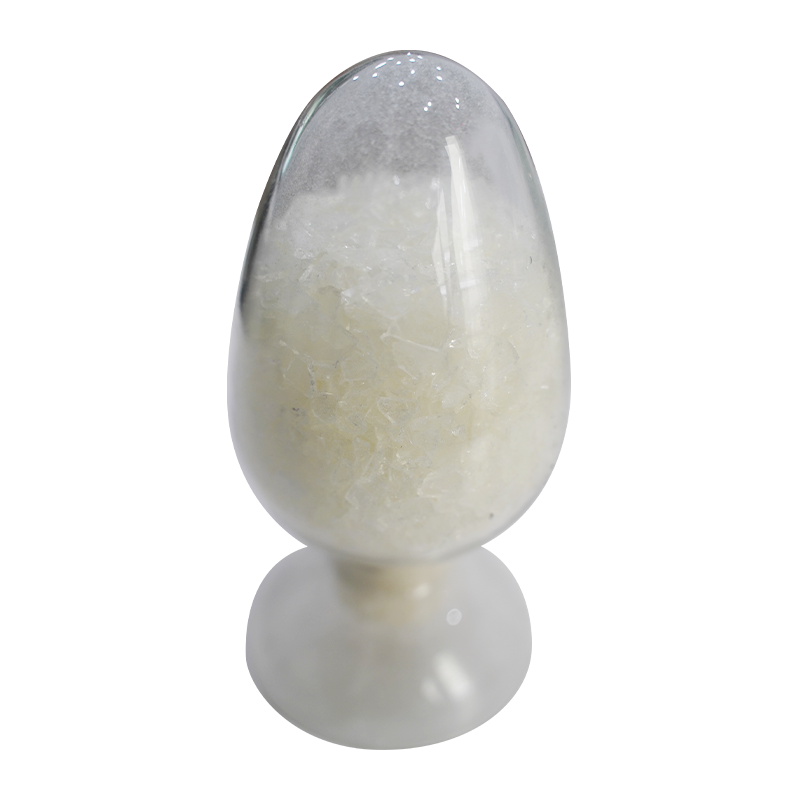 604H High-Temperature Solid Epoxy Resin with Enhanced PurityBuilt on the 604 platform, this solid resin achieves a Tg of ≥150°C with reduced impurities, offering improved chemical, radiation, and UV resistance for extreme industrial uses.View Product →
Aerospace surface protection frequently extends beyond painted skins to composite structures, where surface films and sealants must bond reliably to fiber-reinforced substrates. Epoxy resins used in composite applications follow similar selection logic, and formulators can leverage the same product family across both coating and composite lines.
What to Verify Before Committing to an Epoxy Supplier
Procurement risk in epoxy resins is rarely about price per kilogram. It comes from inconsistent batches, incomplete documentation, and manufacturers who cannot explain their process control. For a formulator selling into aerospace, those risks are multiplied because every qualification test must be repeated if the raw material changes.
- Batch-to-batch consistency: The supplier should monitor epoxy equivalent weight, viscosity, color, and hydrolyzable chlorine across production runs and share the data.
- Documentation quality: Datasheets and test reports must state test methods, typical values, and acceptable ranges clearly enough to support your own release testing.
- Production transparency: Factories with automated equipment and in-house quality teams are easier to audit and more likely to hold tolerances.
- Application expertise: A supplier who understands coating, composite, and adhesive systems can help you avoid mismatches between resin grade and use case.
- Supply stability: Confirm that the qualified grade will remain available with consistent specifications over the long product life cycles typical of aerospace programs.
Aerospace surface protection rewards disciplined material selection. The resin must survive thermal extremes, chemical exposure, erosion, and constant structural movement. The choice between coating-grade liquids, high-temperature specialties, and solid resin formats depends on the application method and the thermal duty. And the confidence in that choice depends on a supplier who controls its process and documents its output. Jiangxi Qingzhu Technology supplies epoxy resins across those categories with automated production and a quality-focused approach, making it a practical partner for formulators who need predictable raw materials for demanding surface protection systems.
Related Product
-
-

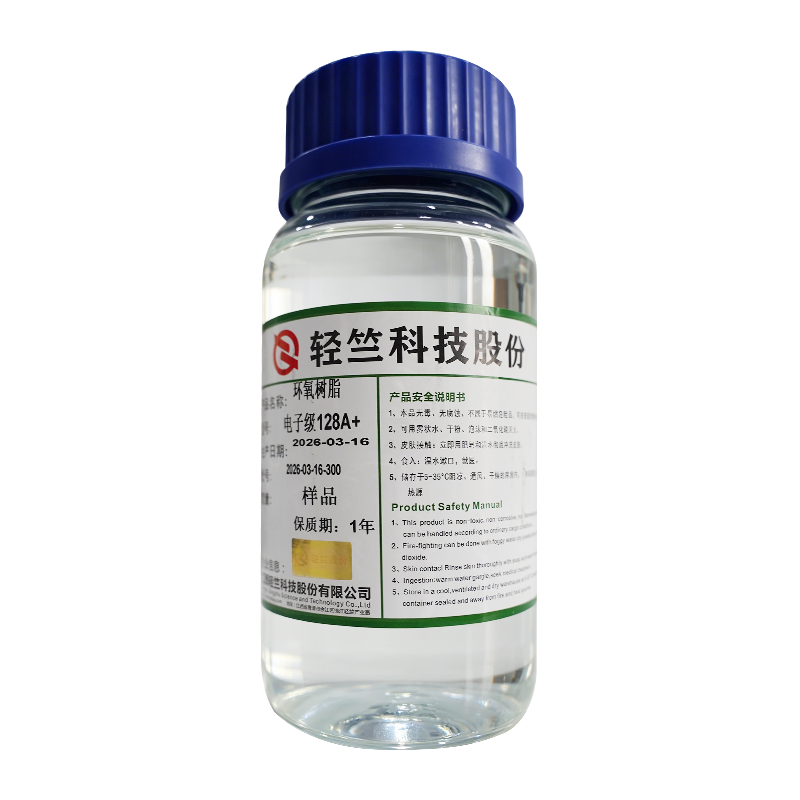
The 128A+ Coating Grade Liquid Epoxy Resin is a bisphenol A liquid resin specifically optimized for ...
+ VIEW MORE -
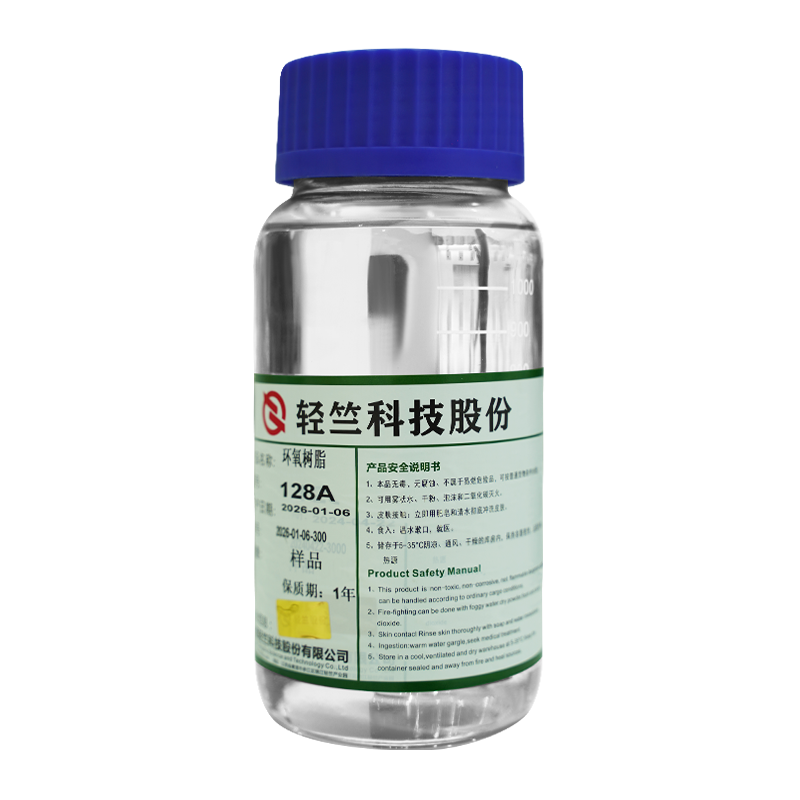
The 128A Standard Grade Liquid Epoxy Resin is a classic bisphenol A liquid resin offering a stable e...
+ VIEW MORE -
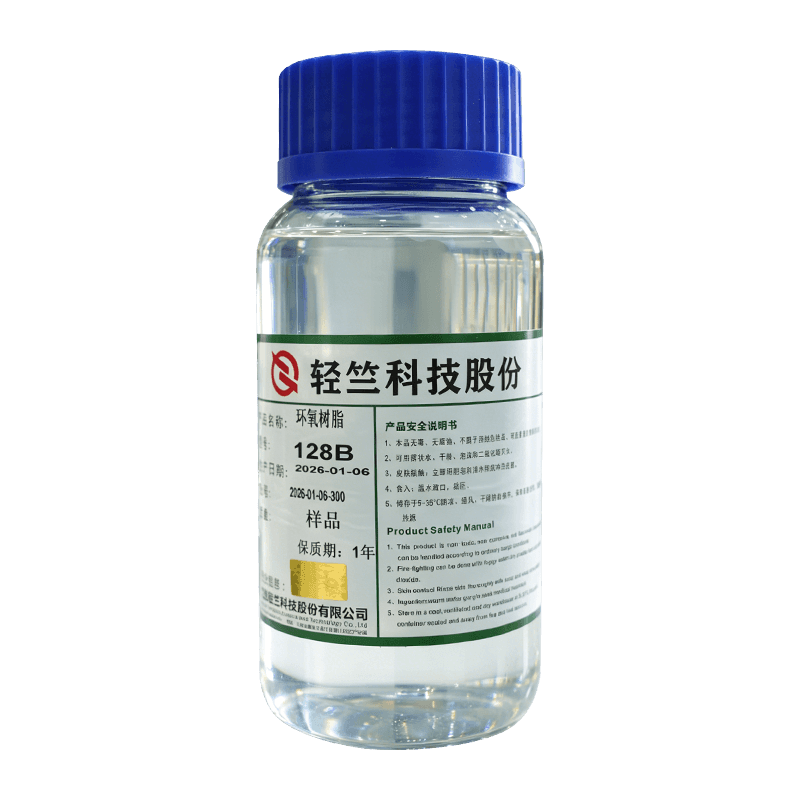
The 128B Low-Viscosity Liquid Epoxy Resin is the lowest-viscosity grade in the 128 Series. While ret...
+ VIEW MORE -
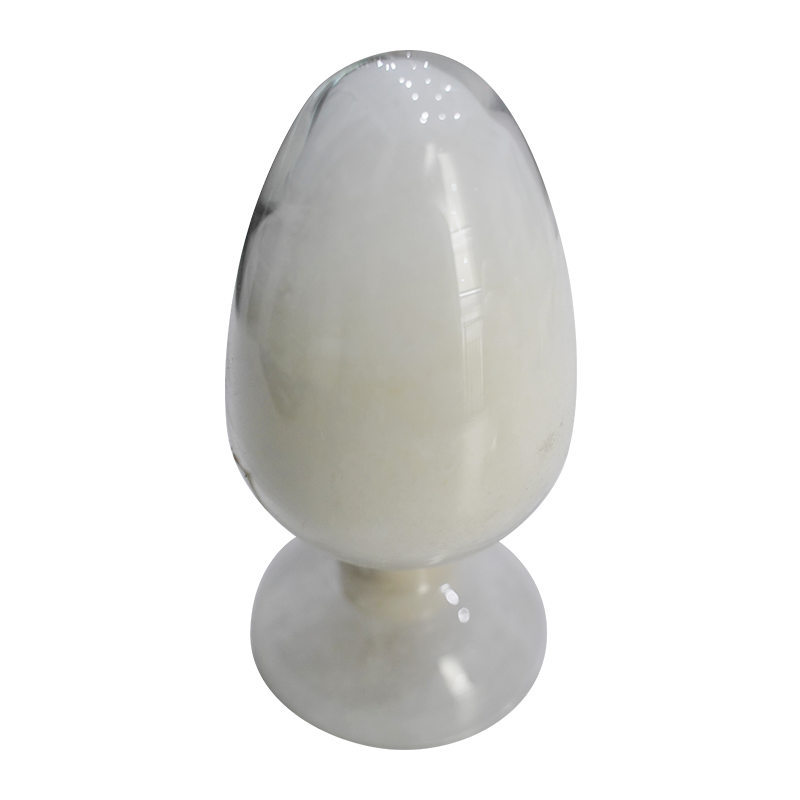
The 601R Electronic Grade Solid Epoxy Resin is a bisphenol A medium-molecular-weight solid resin pro...
+ VIEW MORE

Product Categories
Epoxy Resin 128 Series Epoxy Resin 601 Series Epoxy Resin 604 Series E44 General-Purpose Liquid Epoxy Resin E39D Low-Viscosity Transparent Liquid Epoxy Resin 450A80 High-Solids Flexible Liquid Epoxy Resin 901A80 High-Temperature Specialty Liquid Epoxy ResinContact
 [email protected]
 +86-15257130679
 Qingzhu Industrial Park, Yuanqu Avenue, Industrial Park, Yujiang District, Yingtan City, Jiangxi Province, China
